Lichens Rise to Promi­nence

Note­wor­thy

Lichens, a sym­bio­sis be­tween a fun­gus and a pho­to­syn­thetic part­ner – ei­ther an alga or a cyanobac­terium, are ap­par­ently sim­ple or­gan­isms that nonethe­less hide great com­plex­ity. Con­se­quently, un­der­stand­ing as­pects of their bi­ol­ogy and func­tion­al­ity, their tax­o­nomic clas­si­fi­ca­tion, and the re­cruit­ment of con­stituent mem­bers, in­clud­ing ad­di­tional mi­cro­bial part­ners, re­mains a chal­lenge.

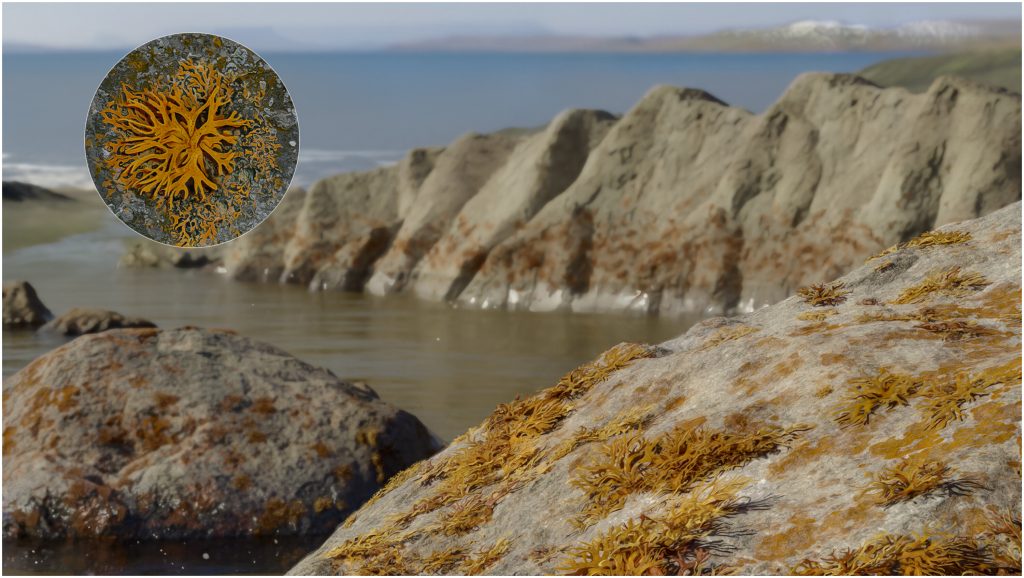
Artis­tic re­con­struc­tion of Spon­gio­phy­ton dur­ing the Early De­von­ian in the high lat­i­tude de­po­si­tional sys­tem of the Paraná Basin. Source

A re­cent study sug­gests a new role for lichens: they may have in­flu­enced the col­o­niza­tion of land, one of the most im­por­tant mile­stones of life on our planet. In this work, re­searchers solved a long-stand­ing de­bate re­gard­ing a wide­spread fos­sils from the De­von­ian pe­riod called Spon­gio­phy­ton. By in­ves­ti­gat­ing the mor­phol­ogy, chem­istry, and min­er­al­ogy of Spon­gio­phy­ton from rocks in Brazil, they show that these fos­sils came from lichens, rather than from al­gae.

These fos­sils es­tab­lish that lichens ex­isted about 410 mil­lion years ago, af­ter vas­cu­lar plants emerged but be­fore these flour­ished on land. This find­ing there­fore in­di­cates that lichens could have acted as pi­o­neer or­gan­isms that al­tered soil con­di­tions and en­abled col­o­niza­tion of ter­res­trial ecosys­tems and the en­su­ing ex­pan­sion of plants and an­i­mals. 


We'd be de­lighted to hear from you! You can com­ment be­low, send us an email or reach us via Bluesky or Mastodon. Please sub­scribe to get email no­ti­fi­ca­tions of our new posts.

Other Posts

  • Pri­ons in bac­te­ria

    by Vin­cent Racaniello — Bac­te­ria do not de­velop trans­mis­si­ble spongi­form en­cephalopathies, but they have been found to pro­duce pri­ons – pro­teins that can adopt al­ter­na­tive con­for­ma­tions with dif­fer­ent func­tions...

  • Cil­i­ate 007

    by Elio — Cer­tain ma­rine cil­i­ates use de­vices wor­thy of James Bond. Or so it looks like. These crea­tures carry bac­te­r­ial ec­tosym­bionts be­long­ing to the Ver­ru­comi­cro­bia that have ex­tra­or­di­nary at­trib­utes. Be­fore re­veal­ing what this is...

  • A Lake­side Tale

    by Christoph — How small are bac­te­ria? And how big can they get as sin­gle cells? For the lower end of the size scale, we know since the work of Jill Banfield's team that a mul­ti­tude of ul­tra-small bac­te­ria ex­ist with a spher­i­cal di­am­e­ters of ~0.25 µm and cal­cu­lated cell vol­umes of ~0.009 µm^3. Much larger are new­born cells of Es­cherichia coli with a length of...

  • De­signer Genes for Spe­cial Bac­te­r­ial Lifestyles

    by S. Mar­vin Fried­man — Thanks to the ex­ten­sive re­search of the past ten years, we've be­come aware that many prokary­otic en­dosym­bionts and ha­bit­ual in­tra­cel­lu­lar pathogens have un­der­gone genome re­duc­tion over evo­lu­tion­ary time. Char­ac­ter­is­tic of this process, termed re­duc­tive con­ver­gent evo­lu­tion, is the dis­card­ing of genes in­volved in meta­bolic path­ways and reg­u­la­tory func­tions that have…

  • The Two Faces of Pho­torhab­dus

    by Merry — Ne­ma­todes – those small, non­de­script round­worms – are among the most nu­mer­ous an­i­mals, found in vir­tu­ally every eco­log­i­cal niche. With an es­ti­mated 400,000 to pos­si­bly 10,000,000 species, their di­ver­sity might match that of the in­sects, but no one knows for sure. Most ne­ma­todes live quiet lives, un­known even by...

  • Evo­lu­tion-Proof­ing An­tibi­otics

    by Vil­helmi­ina Haav­isto — Since the dis­co­ve­ry of pe­ni­cil­lin and its de­vel­op­ment in­to a the­ra­peu­tic agent, an­ti­bio­tics have re­vo­lu­tion­ized me­di­cine and saved count­less lives. How­ever, the way we use these life-sav­ing me­di­cat­ions is fun­da­men­tal­ly un­sus­tain­able as pa­tho­gens ra­pid­ly evolve re­sist­ance, ren­der­ing ma­ny se­ri­ous in­fect­ions ef­fect­ive­ly un­treat­able.

Subscribe
Notify of
0 Comments
Oldest
Newest Most Voted