Lichens Rise to Prominence
Noteworthy
Lichens, a symbiosis between a fungus and a photosynthetic partner – either an alga or a cyanobacterium, are apparently simple organisms that nonetheless hide great complexity. Consequently, understanding aspects of their biology and functionality, their taxonomic classification, and the recruitment of constituent members, including additional microbial partners, remains a challenge.
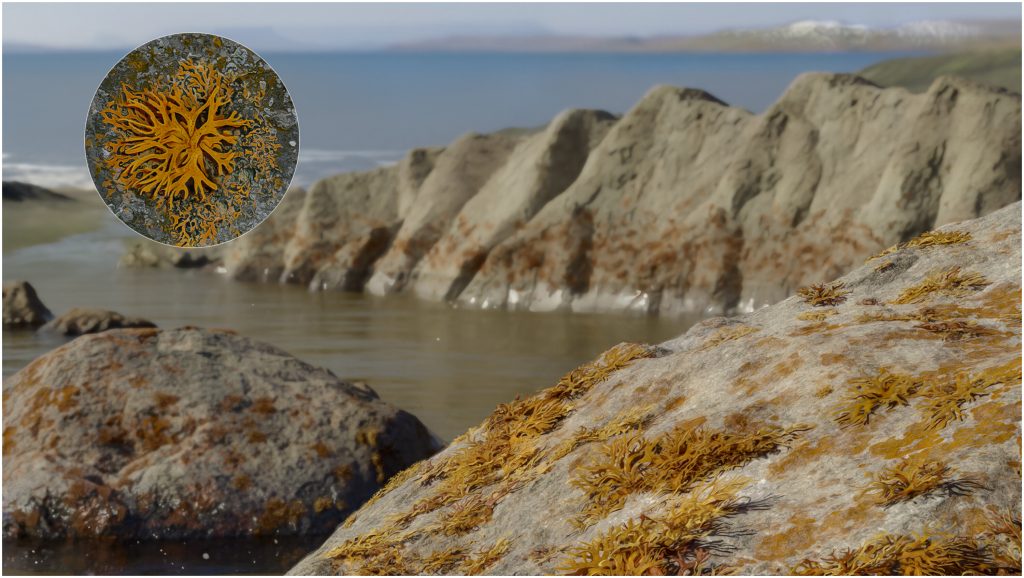
Artistic reconstruction of Spongiophyton during the Early Devonian in the high latitude depositional system of the Paraná Basin. Source
A recent study suggests a new role for lichens: they may have influenced the colonization of land, one of the most important milestones of life on our planet. In this work, researchers solved a long-standing debate regarding a widespread fossils from the Devonian period called Spongiophyton. By investigating the morphology, chemistry, and mineralogy of Spongiophyton from rocks in Brazil, they show that these fossils came from lichens, rather than from algae.
These fossils establish that lichens existed about 410 million years ago, after vascular plants emerged but before these flourished on land. This finding therefore indicates that lichens could have acted as pioneer organisms that altered soil conditions and enabled colonization of terrestrial ecosystems and the ensuing expansion of plants and animals.
We'd be delighted to hear from you! You can comment below, send us an email or reach us via Bluesky or Mastodon. Please subscribe to get email notifications of our new posts.