
Talmudic Question #108

Why do you suppose that, to our knowledge, animals have not evolved the ability to break down cellulose without the help of microbes?
Why do you suppose that, to our knowledge, animals have not evolved the ability to break down cellulose without the help of microbes?
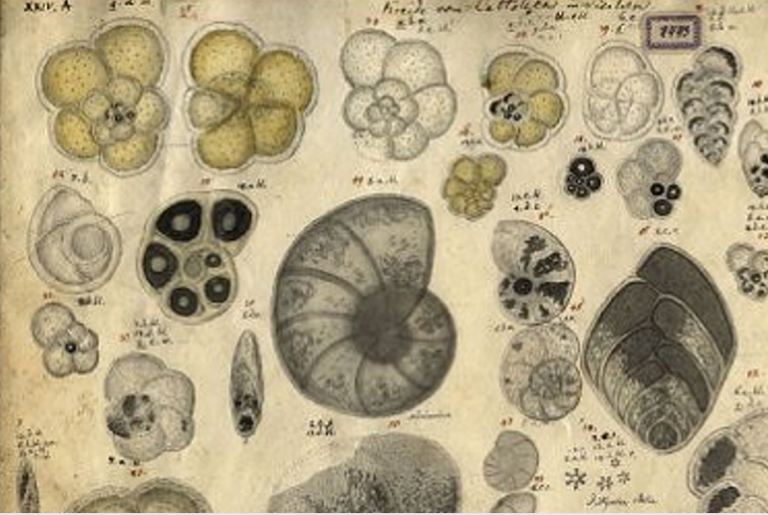
by Elio — Not so long ago, it would have seemed implausible that biology would return to its origins as a visual science. Some would have considered this a regression to the days when biologists were pretty much confined to studying just what they could see, such as the shapes of organisms and their tissues. Back then, they focused on refining what Pliny had observed with his bare eyes, what Hooke and Leeuwenhoek saw under the microscope.

In the 'Twisted Bacteria' blog, César Sanchez poses the question: Why don't plants have any chlamydial symbionts? He proposes several possible answers and invites further speculation. We suggest you go to his website and post your comments there.

by Merry Youle — Back in 1983, researchers at Yale borrowed a microbiological tactic to study evolution at a "single gene locus" in a multicellular animal: the use of altered growth media to select for nutritional mutants. They confronted populations of Drosophila pseudoobscura with a growth medium containing either maltose or starch as the sole carbohydrate source and...

by Steven Quistad — One hundred million years ago the earth's climate was much warmer than today and vast inland seas stretched across entire continents. The land was dominated by charismatic megafauna that would one day serve as inspiration for Sir Arthur Conan Doyle's novel The Lost World. This period is commonly referred to…

by Elio — You probably think that ultimately all mushrooms turn into mush. Well, yes, indeed they do, but some do it with alacrity. A group of mushrooms called Inky Caps have a way of getting rid of unwanted tissue in their cap by dissolving it. Some of these mushrooms...
In the same spirit as Talmudic Question #4, posted on December 19, 2006, here's another similarly "crazy" one...
This is a perfect example of a Talmudic Question, Elio! When I teach introductory biochemistry, I often get the "so why does the enzyme do it that way?" kind of question. Why does Rubisco mistake carbon dioxide for oxygen? What does triose phosphate isomerase produce 96% DHAP (which is not usable, and can be toxic) to 4% GA3P at equilibrium (though to be fair, that latter example is a good illustration and reminder that *life* is not at equilibrium)?
I sometimes reply that these are more theological than biochemical questions. It's not always a satisfying answer, sort of like "what controls transcription factors" being answered by "other transcription factors."
Getting back to cellulose, I hammer on my freshman to consider the "shape" of ligands and bonds—I call it a made up word, "stericity"—are central to all of biology. So the beta 1->4 glucosidic bonds are not well recognized by eukaryotic hydrolases? And it appears that microbes and macrobes look at this as a metabolic problem with a "crowdsourced" solution (as observed in the microbial universe within a milliliter of rumen fluid, to borrow from William Blake).
Great opportunities for classroom discussion, in any event. I am going to pick and choose among your Talmudic Questions and make it a weekly feature in my Fall microbiology course (and I still think the collection would make one heck of a book!).
Thanks again, Mark Martin
Mark,
Wat a lovely comment! As I've said before, I would love to be in your class. You make a key point in Biology. Thanks a lot.
Elio