
Talmudic Question #45

What do you think are the most interesting unsolved questions in E. coli and Salmonella research?
What do you think are the most interesting unsolved questions in E. coli and Salmonella research?

Ecological Role Of Epibiotic Biofilms On Marine Organisms by Elio — In contrast to air, the ocean represents a benign environment for most living organisms: With the exception of some harsh marine environments, the means of physicochemical properties are generally not far off the optimum of most species and their fluctuations are moderate, rarely exceeding biological tolerance limits. So begins a review…

by Merry Youle — Well over two years ago, through this blog I had the opportunity to edit a research paper for Forest Rohwer. One thing led to another, and we then spent the better part of two years writing a book together — the first book for either of us. 'Coral Reefs in the Microbial Seas' is now published! It is a...

by Robert Gifford — The delightful word 'oocyan' refers to the trait of blue-green eggshell color that occurs in native chickens of Chile (Mapuche fowl) and some of their descendants in North America and Europe, as well as certain Asian chicken breeds (e.g. Dongxiang, Lushi)…
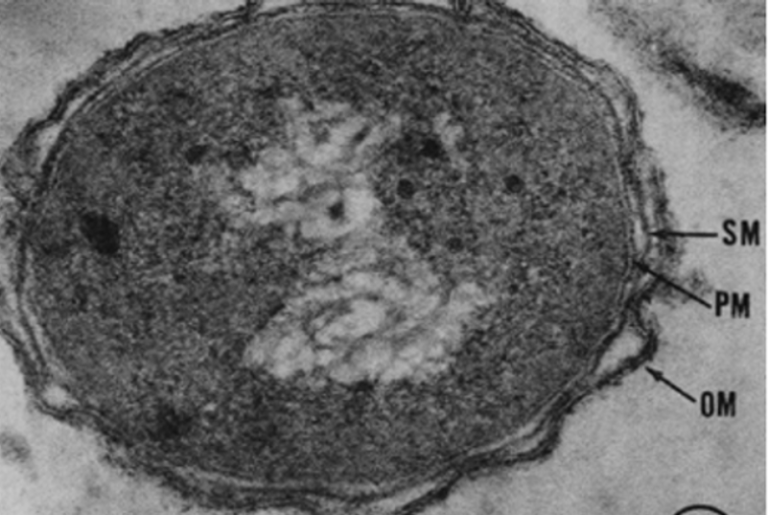
Pictures Considered #34 by Elio — In a recent "Classic Spotlight" in the Journal of Bacteriology, the editor in chief, Tom Silhavy, pointed out that the first visual proof that Gram-negative bacteria have two membranes came from work by Bladen and Mergenhagen. In their 1964 paper...
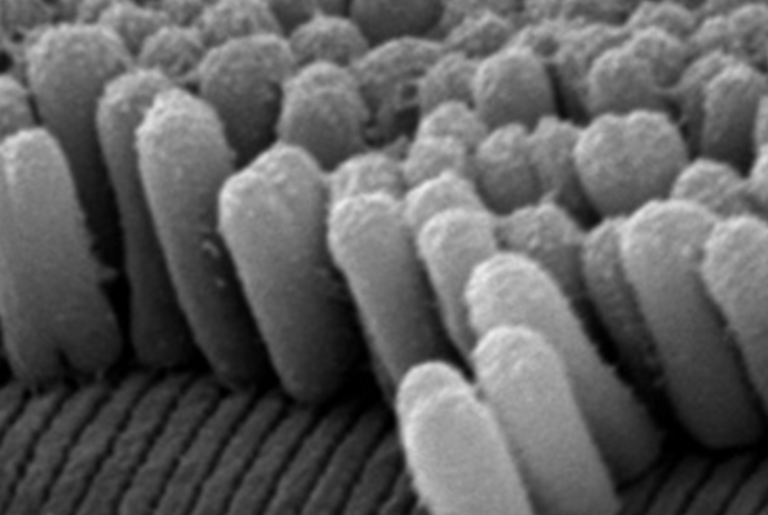
by Nanne Nanninga — The common picture of a dividing rod-shaped bacterium encompasses the positioning of the divisome, including an FtsZ-ring, in the cell center. This occurs after the cell has doubled its length without increasing its diameter. Conversely, increase in diameter without cell elongation would seem highly unlikely in a rod-shaped…

by S. Marvin Friedman — As discussed in a recent epic Perspective on the animal-microbe symbioses (and commented in this blog), we are beginning to understand the many contributions made by each partner. One of the most widely studied symbioses is that of the luminous bacterium Vibrio fischeri and the Hawaiian Bobtail squid, Euprymna scolopes. In a recent publication…
What? No one has an answer? I'm waiting! I don't know a thing about E.coli or Salmonella. But they sure make eating out a scary thought so I'm guessing there's boatloads of research. Cough it up sciency people!
Love, Elio's daughter
The genomes of E. coli and Salmonella contain what appear to be genes involved in quorum sensing. But to my knowledge, not much is known about the phenotypes of these two bacteria regulated by quorum sensing? Please correct me if I'm wrong. I would like know more about that, and about inter-species interactions between E. coli and Salmonella with other microorganisms, which may involve quorum sensing molecules too. So to summarize, how do E. coli and Salmonella participate in inter-species communication, and why?
My humble suggestions:
Methylglyoxal synthesis — E. coli and other bacteria as well as eukaryotes produce methylglyoxal, quite toxic metabolic product that kills bacteria as they produce that inside the cell. If many bacteria are producing it, it should give some advantage, especially if it is toxic in a bit larger amounts. However, nobody knows why it is useful, although some hints have emerged.
Stringent response — pleiotropic widespread bacterial specific process intensively studied for 50 years, stops growth and protein synthesis of bacteria, almost instantly. However, stopping of translation can not be so fast based on the effects on the inhibition of stable RNA synthesis (hallmark of stringent response).
Glycogen production — although it seems plain and simple, every article I've read on the production of glycogen starts with a quite surprising statement that it is not clear why bacteria produce it.
Elio's reply:
Your suggestions are most perceptive. They span several seemingly unrelated areas, which makes them particulalry valuable. I would rank them high on the list