
Talmudic Question #52

by Mark O. Martin
Given the ubiquity of intracellular associations between eukaryotes and prokaryotes, why are there so few reports of prokaryotes living "within" prokaryotes? In fact, I can only think of one reported case.

How slightly tragic that I comment on my own posts! Anyway, a couple of recent articles that are relevant to this discussion that I missed early on:
Davidov Y, Jurkevitch E. (2009). "Predation between prokaryotes and the origin of eukaryotes." Bioessays. 31:748–757.
and...
Vesteg M, Krajcovic J. (2008). "Origin of eukaryotic cells as a symbiosis of parasitic alpha-proteobacteria in the periplasm of two-membrane-bounded sexual pre-karyotes." Commun Integr Biol. 1:104–113.
My guess is that, as we look deeper, we will find other examples of "prokaryotes within prokaryotes."
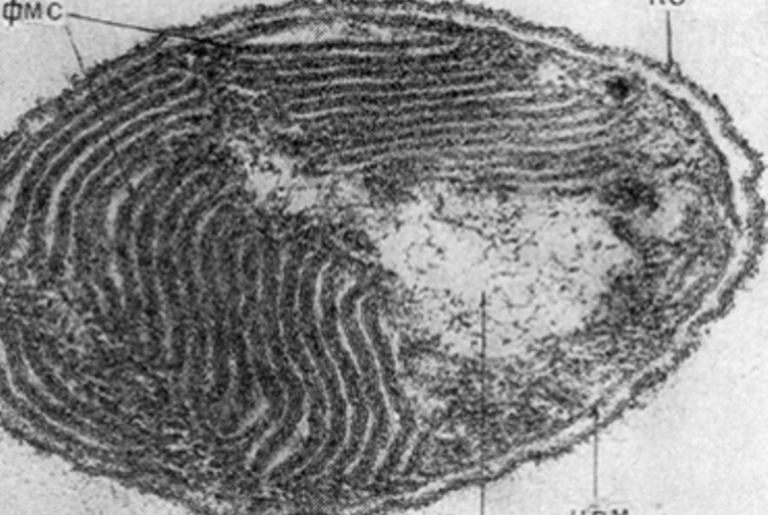
I guess predatory bacteria like Bdellovibrio don't count as "within", as they are in the periplasmic space? Although, supposedly there are predatory bacteria such as Daptobacter that actually enter the cytoplasm, although I think somebody (maybe even Mark Martin) told me that nobody has managed to grow it since Margulis' initial description.
I love topics like this! Alas, I have nothing useful to contribute, but I wanted you to know that this post is highly appreciated nonetheless.
Jonathan, I would very much like to tell you that Daptobacter can be grown in culture. I haven't seen any evidence of this, nor has anyone I know published on such an event. I would love to see high school students look for predatory bacteria from all kinds of sources, and surely such an interesting "undomesticated" beast would show up.
I worry about "predators" identified solely by EM. But then, I was trained as an old school (pre-genomics—I don't understand your business very well, I am shamed to admit) geneticist, to whom phenotype is everything.
As for the periplasm, I admit freely it is a unique compartment. Maybe the best approach is to search for predators of Gram positive bacteria? We would probably find "peptidoglycan surfers"!
Edouard Jurkevitch and his coworkers have an interesting model, where the intracellular "invader" provides some advantage to the larger bacterium. I would love to see such an arrangement! And to borrow and modify from J.B.S. Haldane, the microbial world isn't stranger than we imagine. It is stranger than we *can* imagine.
A description of a Aug. 20th Nature paper that is related to the topic. The endosymbiosis involves actinobacteria and clostridia.
Cheers,
Robert Jung
http://www.sciencedaily.com/releases/2009/08/090819135436.htm
Elio says:
Thanks for pointing out the Lake paper. We hope to see it reviewed in these pages at some point.
Regarding /Daptobacter/, I recommend you the article "Bacterial symbioses. Predation and
mutually beneficial associations" by Isabel Esteve and Núria Gaju.
http://www.im.microbios.org/06june99/06%20Esteve.pdf
Oh, I love the idea of Daptobacter, and I am sure that there are beasties like that out there. But the problem is that no one has yet cultivated the organism (or, at least, has published on it and is willing to distribute it to other researchers). It is a very tough issue to show predatory behavior solely from EM. But there are many more tools available now: look at the fine work with Nanoarchaeum and Igniococcus.
So I look forward to seeing more "types" of predation cracked with microbial systems that we can study in lab.