Microbes Energize the Brain
Noteworthy
Humans are different from other primates due to a combination of features. Prime among these is the large brain size that endows us with a distinct capacity for complex reasoning, planning, and decision-making. But a large brain size demands a lot of energy. Could members of the gut microbiota have co-evolved to support this high demand for glucose in our brains?
This is the question addressed in a recent study by researchers from various institutions in the US. The gut microbiota is known, after all, to influence brain activity by its connection via the gut-brain axis. To understand whether primate brain evolution could have been influenced by microbes in the gut, the authors inoculated germ-free mice with the gut microbiota from three primate species with different brain sizes – humans, macaques, and squirrel monkeys. In a previous study, this group had shown that transferring gut microbes from primates into mice influenced host energy metabolism.
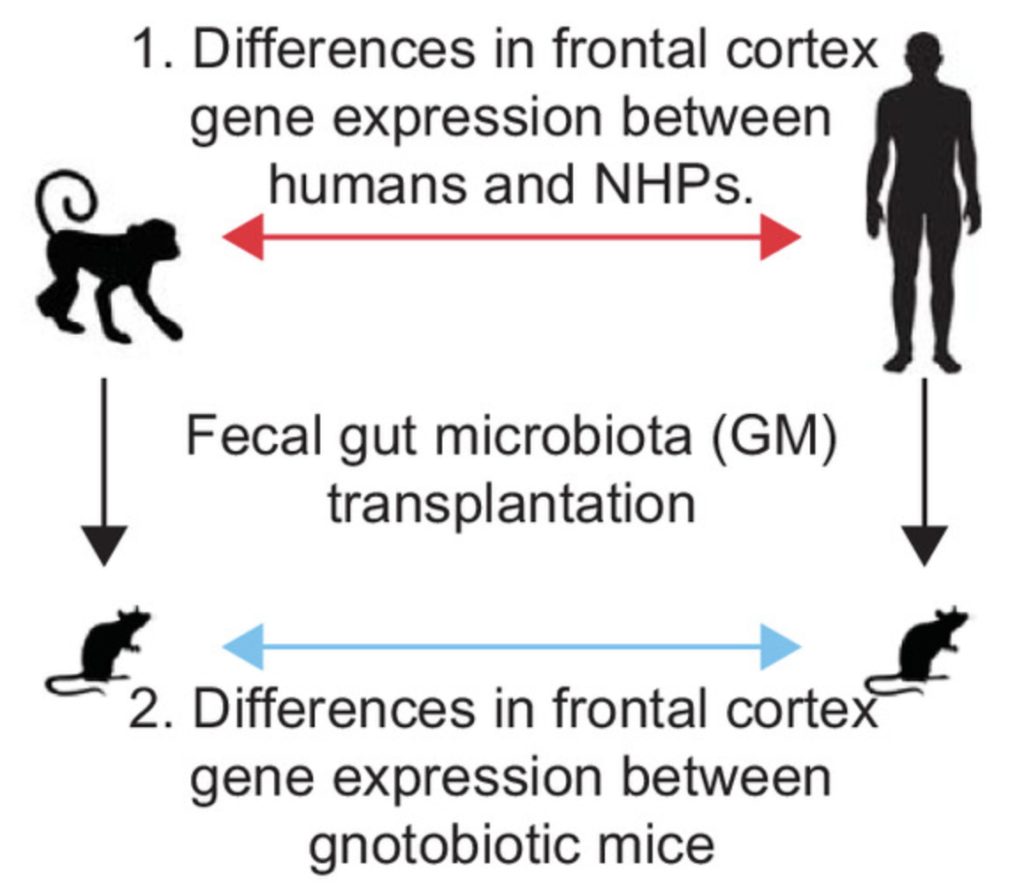
Human and monkey gut microbiota (GM) drive divergent gene expression in mouse brains. Cartoons and arrows summarize experiments and analyses reported in the study. Double-headed arrows represent differential gene expression between host groups, including humans, non-human primates (NHPs), and germ-free (gnotobiotic) mice. Single-headed arrows represent fecal-microbiota transplantation. Source. Frontispiece: Human and macaque brains compared, modified from source.
In this new study, the connection between gut microbes and the brain became evident. Their approach involved the analysis of gene expression in the frontal cortex, the part of the brain responsible for high-level cognitive functions, such as decision-making, planning, and problem-solving. Frontal cortex gene expression patterns in mice brains with transplanted microbiota looked similar to those in the original primate hosts. But even more interesting was the fact that the human gut microbiota increased the expression of genes associated with energy production and use in the brain, and downregulated some genes involved in neurodevelopmental disorders.
Although this study was limited to samples from just three primate species, it does suggest that gut microbes can rewire the brain. The observed effects also hint at a possible co-evolution of gut microbes to support the energetic demands of larger brains, an intriguing hypothesis that will need further testing.
We'd be delighted to hear from you! You can comment below, send us an email or reach us via Bluesky or Mastodon. Please subscribe to get email notifications of our new posts.