A New Model for the Formation of an Endodontic Biofilm
by Elio and Roberto
As we speak, biofilms are the rage in microbiology. And why not, being that most bacteria in nature are not free-swimming but are attached to some surface. Model systems for biofilms are therefore sorely needed. Researchers from two institutions in Bogotá, Colombia, the Universidad del Bosque and the Universidad de los Andes (with Diana M. Castillo as the senior author) combined forces to develop a novel model for biofilm formation by Enterococcus faecalis. This pathogen thrives both in the human gut and on the surface of teeth. It is also found in the root canals, where it can cause serious endodontic infection.
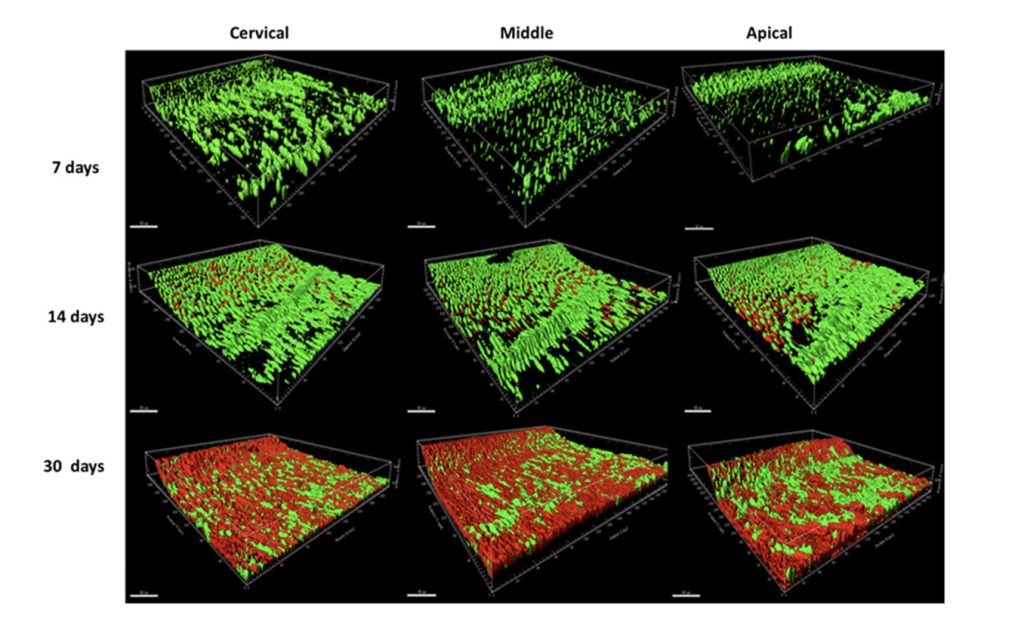
Fig.1. Three-dimensional reconstruction of confocal laser scanning microscopy images of biofilm formation in cervical, middle, and apical surfaces at three time points. Green fluorescence corresponds to viable bacteria, red fluorescence corresponds to nonviable bacteria. Scale bars = 50 µm. Source. Frontispiece.
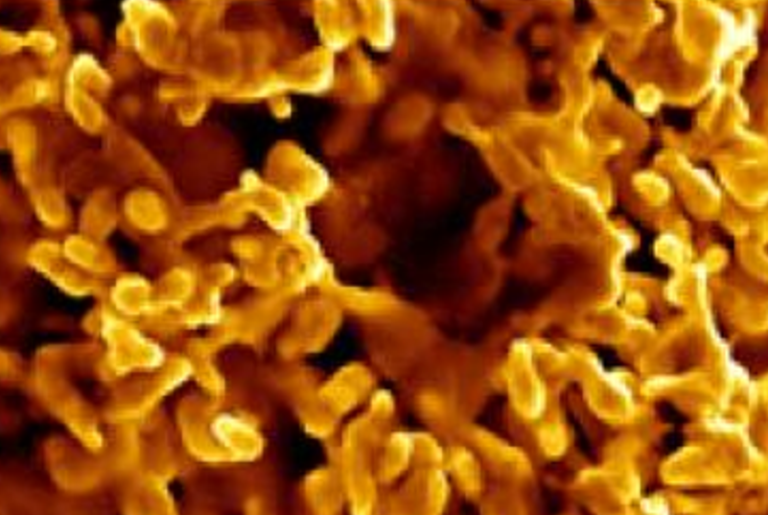
The model in question consists of growing Enterococcus faecalis on the surface of the roots of teeth, pieces of dentin (the middle layer of the tooth, between the enamel and the pulp), cut from healthy freshly extracted (for orthodontic purposes) human teeth and surface sterilized before being inoculated with E. faecalis cultures. The samples were incubated for up to a month to simulate the conditions in a real infected tooth. Bacteria on the dentin root surface were enumerated and examined using two approaches: field emission scanning electron microscopy and confocal laser scanning microscopy. After 14 days, the root surfaces became homogenously colonized and most of the cells were viable as judged by the SYTO9/propidium iodide live/dead staining. By 30 days more than half the cells were dead. To paraphrase the words of the authors, "this new in vitro E. faecalis biofilm formation endodontic model has an appropriate biovolume and a stable three-dimensional structure. It is compatible with a mature biofilm under conditions of nutritional restriction, as usually occurs in the endodontic environment. It should allow future evaluation of the efficacy of antimicrobial substances with a more clinical approach." It sounds like they are ready to go.