
Streptomyces Atlas
by Mechas and Roberto — A new Streptomyces regulatory atlas for the community

by Mechas and Roberto — A new Streptomyces regulatory atlas for the community

by Tobias Engl — Beewolves, their larvae, and their Streptomyces symbionts not only use multiple, largely different classes of chemical compounds to protect themselves against detrimental microbial competitors. To be most effective, these compounds are produced and deployed in a precisely timed sequence. ...
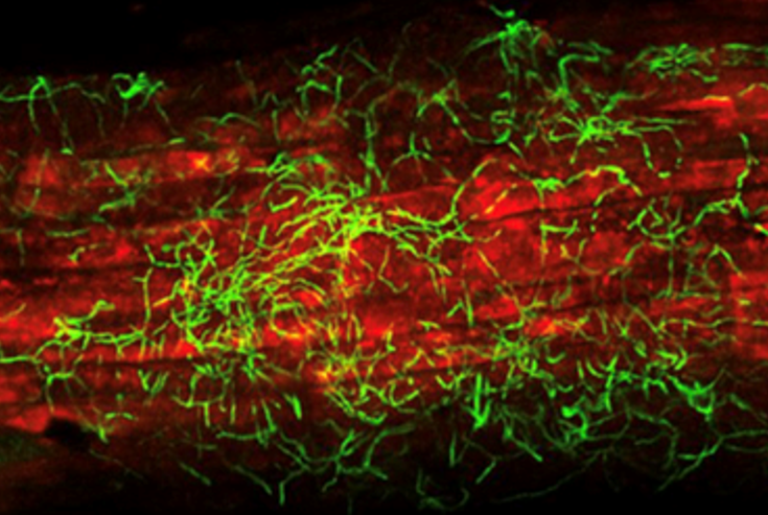
by Roberto — Because of the deleterious effects on soil due to the prolonged use and overuse of synthetic fertilizers, the quest for bacteria able to promote plant growth is an ongoing pursuit. Yet, these searches are usually focused on members of a few genera, prime amongst these Bacillus and Pseudomonas. What about the Streptomyces?

Pictures Considered #52 by Christoph — 𝘚𝘵𝘳𝘦𝘱𝘵𝘰𝘮𝘺𝘤𝘦𝘴 stacks Z‑rings... into ladders inside its aerial/sporogenic hyphae. If this sentence strikes you as a barrage of jargon or just gibberish, don't despair, help is coming. First, enjoy the "light show" in the 20‑second video clip on the right side. It runs in loop, so you can follow more than...

by Roberto — The evolutionary trajectories of bacteria are greatly influenced by their reproductive success in changing environments. Of course, this is not just about how fast bacteria divide when conditions permit growth but also how well they survive in the absence of growth. In addition, an important determinant of the overall fitness of a bacterial lineage is...
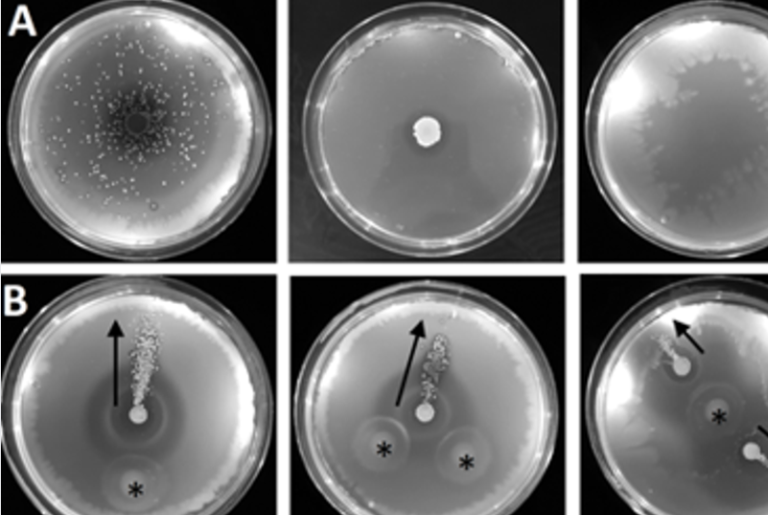
by Christoph — Streptomycetes, these non-motile Actinobacteria that are capable of mycelial growth much like fungi, are quite inventive when it comes to the distribution of their spores. They don't just rely on enchanting scents like geosmin that they emit to attract springtails, which transport their spores over long distances (see Roberto's recent post). They also routinely employ bacterial transport workers.