• Ex­tremely Slow Growth in the Seabed

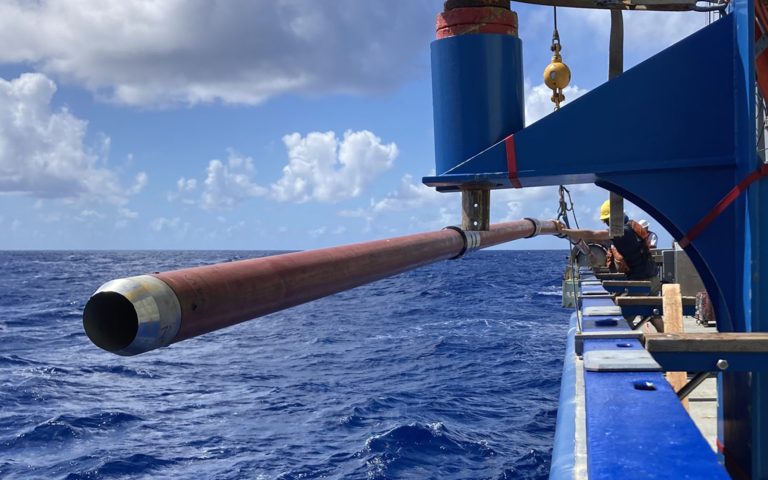
    by Roberto — Es­ti­mates are that, at the global scale, there are more mi­cro­bial cells – maybe 5 x 10^29 – in the seabed than in the wa­ter col­umn above. These cells are not just near the seafloor, many of them lie buried deep in the sed­i­ment. Very deep in­deed, as deep as 2.5 kilo­me­ters. And they've been there for a long time, even mil­lions of years.

  • How to Build a Gi­ant Wino­grad­sky Col­umn

    by Scott Chim­i­leski — In part one of my tour of the Mi­cro­bial Life ex­hi­bi­tion at the Har­vard Mu­seum of Nat­ural His­tory (HMNH), I wrote that the mi­croscopy sta­tion and the live bac­te­r­ial colonies are my per­sonal fa­vorites. Ac­tu­ally, those are my sec­ond and third fa­vorites. I was sav­ing my "most fa­vorite" ex­hibit for its very own post: a gi­ant-sized, liv­ing and chang­ing Wino­grad­sky col­umn.

  • More Sand Grains

    by Christoph — What you see here in Fig­ure 1d com­petes with a NASA photo from 2012 for the best shot of the Milky Way but – spoiler alert! – it's ac­tu­ally a close-up of some hum­ble mi­crobes gath­ered on a grain of sand. I con­cluded the pre­vi­ous post about bac­te­ria on sand grains with the ques­tion: and where are the archea? The rea­son for...

  • One Grain of Sand

    by Christoph — Mi­cro­bi­ol­o­gists face three prob­lems to­day when talk­ing to fel­low bi­ol­o­gists or any cu­ri­ous au­di­ence: the num­bers of prokary­otes and uni­cel­lu­lar eu­kary­otes, their di­ver­sity, and their tini­ness. Sure, one can do the maths and jug­gle with num­bers. That's en­ter­tain­ing, and every­body is amazed when they learn that mi­cro­bi­ol­o­gists eas­ily count up to 10^8 in­di­vid­ual cells in an E. coli colony...