
Cyanos in the Far-Red Light District
by Sofie van Dorst — How a Cyanobcterium rewires its antenna photosystem under far-red light.

by Sofie van Dorst — How a Cyanobcterium rewires its antenna photosystem under far-red light.

Noteworthy — While plants and animals can measure differences in the length of days and nights bacteria, with their short life spans, would not be expected to do so.

Noteworthy — Fungi are wonderfully diverse and versatile microorganisms. And it is perhaps this versatility that makes them so adept at forming symbiotic relationships with other organisms. Mycorrhizae or endophytic fungi, for example, inhabit plant tissues where they reside within or between plant cells.
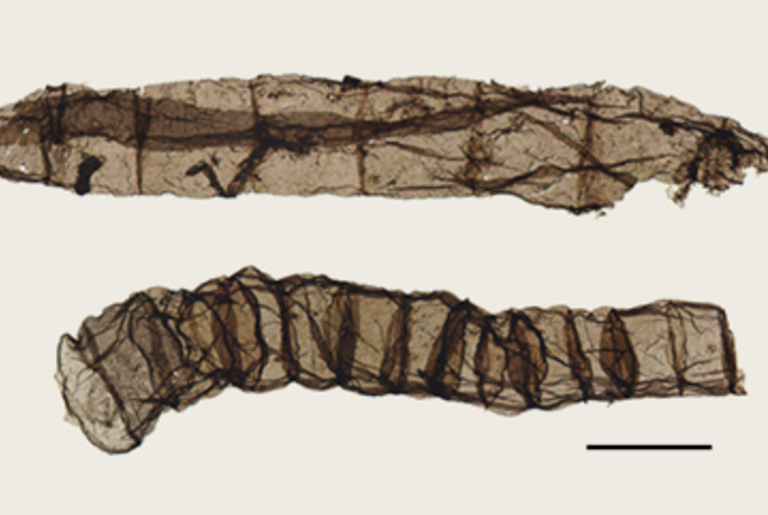
by Roberto — In the early years of STC, Elio wrote two posts on multicellularity. Why? Because "we lovers of microbes delight in the complexity of multicellular bacteria such as the actinomycetes, the myxobacteria, and some cyanobacteria," said he. Why do I write about this again? I'll argue that those three bacterial types are only the tip of the iceberg, bacterial multicellularity is the norm.

by Elio — The very first entry in this blog, in December 2006, was about the amazing fact that some photosynthetic cyanobacteria have a circadian rhythm. I entitled it "It Don't Mean a Thing If It Ain't Got That Swing."

by Scott Chimileski and Roberto — Earth has a pulse. And at this time in human history, we can see it. Instead of a heartbeat, Earth's surface pulsates with the activity of trillions of organisms, each part of one, interconnected biosphere driven by microbial life. Instead of beating about once per second, the biosphere beats around once a year. From 1997 to 2017,...