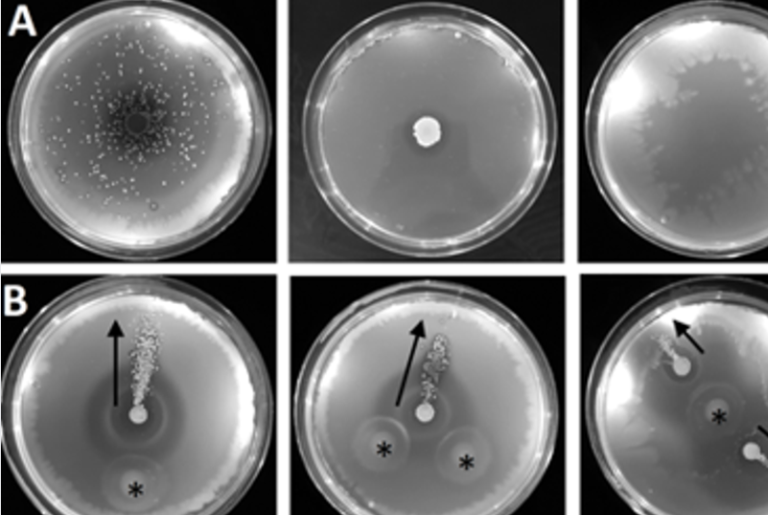
• Strep­to­myces spores tak­ing a ride...

    by Christoph — Strep­to­mycetes, these non-motile Acti­nobac­te­ria that are ca­pa­ble of mycelial growth much like fungi, are quite in­ven­tive when it comes to the dis­tri­b­u­tion of their spores. They don't just rely on en­chant­ing scents like geosmin that they emit to at­tract spring­tails, which trans­port their spores over long dis­tances (see Roberto's re­cent post). They also rou­tinely em­ploy bac­te­r­ial trans­port work­ers.

  • Space-tol­er­ant Mi­cro­nauts

    by Alise Muok and Ar­i­ane Briegel — Try to imag­ine a crea­ture that can sur­vive from the heat of 150°C (300°F) to the cold of –270°C (–454°F), in the ab­sence of oxy­gen, af­ter com­plete de­hy­dra­tion, at 1,000× at­mos­pheric pres­sure, and af­ter the ra­di­a­tion and vac­uum of space. Who might such space trav­el­ers be?

  • Of Terms in Bi­ol­ogy: Moon­light­ing

    by Christoph — The Cam­bridge Dic­tio­nary de­fines "moon­light­ing" as: the act of work­ing at an ex­tra job, es­pe­cially with­out telling your main em­ployer. (Far) off the job mar­ket, "moon­light­ing pro­teins" are sin­gle polypep­tide chains that per­form mul­ti­ple bio­chem­i­cal or bio­phys­i­cal func­tions in ar­chaeal, bac­te­r­ial, and eu­kary­otic cells.

  • Risks and ben­e­fits of work­outs while fast­ing (1|2)

    by Christoph — No in­tro to­day, I'm about to make one big leap right into the sub­ject. It's about Bacil­lus sub­tilis but I will not touch what this multi-tal­ented bac­terium is so well known for: sporu­la­tion, biofilm for­ma­tion, motil­ity by swim­ming, swarm­ing motil­ity, can­ni­bal­ism, and "nat­ural com­pe­tence" for DNA up­take (aka trans­for­ma­tion). It's about the re­ac­tion of B. sub­tilis to food de­pri­va­tion.

  • The world of small RNAs and reg­u­la­tory pep­tides in prokary­otes

    by Matthias Gim­pel — The nat­ural habi­tats of most bac­te­ria are char­ac­ter­ized by chang­ing en­vi­ron­men­tal con­di­tions such as fluc­tu­a­tions in tem­per­a­ture, os­mo­lar­ity, chang­ing or lim­ited nu­tri­ent sup­ply, or the oc­cur­rence of com­pet­ing mi­crobes and bac­te­rio­phages. Con­se­quently, flex­i­ble and en­ergy-ef­fi­cient adap­ta­tion to these chang­ing ex­ter­nal pa­ra­me­ters is the ba­sis for their sur­vival.

  • Pro­grammed Cell Death

    by S. Mar­vin Fried­man — Gone are the days when bac­te­ria were thought to just grow and di­vide and not bother to con­verse with one an­other. That sim­ple idea has pro­duced moun­tains of data and most of what we know about bac­te­r­ial phys­i­ol­ogy is based on this no­tion. It turns out, as we know now…