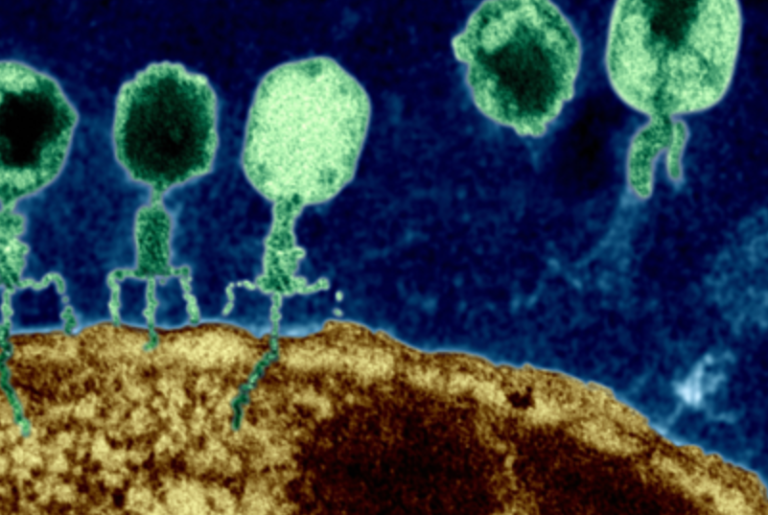
• BYOG: Bring Your Own Gene

    by Merry — Of ne­ces­sity, viruses rely on their host cells for both en­ergy and mol­e­c­u­lar build­ing blocks. Typ­i­cally, lytic in­fec­tion shuts down the syn­the­sis of host pro­teins, and the cell's trans­la­tion ma­chin­ery is put to work in the ser­vice of vi­ral repli­ca­tion. For ma­rine cyanophage, this strat­egy runs into a trou­ble­some wrin­kle.

  • Get­ting CRISPR

    by Merry — When you're out­num­bered five or ten to one, strat­egy counts. Bac­te­ria and ar­chaea are mas­ter strate­gists, thriv­ing de­spite the om­nipresent hordes of phage. For some time, it has been known that prokary­otic cells have ploys for block­ing phage ad­sorp­tion, pre­vent­ing DNA in­jec­tion, rec­og­niz­ing and cleav­ing the in­com­ing DNA, and oth­er­wise abort­ing the in­fec­tion. Re­cently, an­other po­tent – and likely very an­cient – mech­a­nism of de­fense...

  • Struc­tural Grace II

    by Elio — In her au­to­bi­og­ra­phy in the 2007 An­nual Re­view of Mi­cro­bi­ol­ogy, Mar­garita Salas pub­lished an elec­tron mi­cro­graph of rare beauty. It shows the DNA of phage Φ29 ca­su­ally coiled around it­self, with pro­tein TP (for Ter­mi­nal Pro­tein) at the two ends. Not only is this a fine demon­stra­tion of a spe­cific DNA-pro­tein in­ter­ac­tion, but the...