• The More the Mer­rier

    by Elio — Some­thing there is that likes to mull over sym­bioses. In­deed, what is more en­joy­able to con­tem­plate than the re­la­tion­ship be­tween two or­gan­isms? The an­swer? One that in­volves three, or four, or even more. Not that this is un­usual, just that it's al­ways ex­cit­ing. Here are two ex­am­ples.

  • Jump­ing Genes, Wol­bachia Style

    by Merry and Elio — Or­ganelles were en­dosym­bionts that ei­ther made good or were en­slaved, de­pend­ing on your point of view. Ei­ther way, some of their genes now re­side in the nu­clear genome of their eu­kary­ote host. We also know that there are some bac­te­r­ial en­dosym­bionts liv­ing to­day within mul­ti­cel­lu­lar eu­kary­otes. Can their genes also...

  • How Many Genomes Does It Take to Change a Light Bulb?

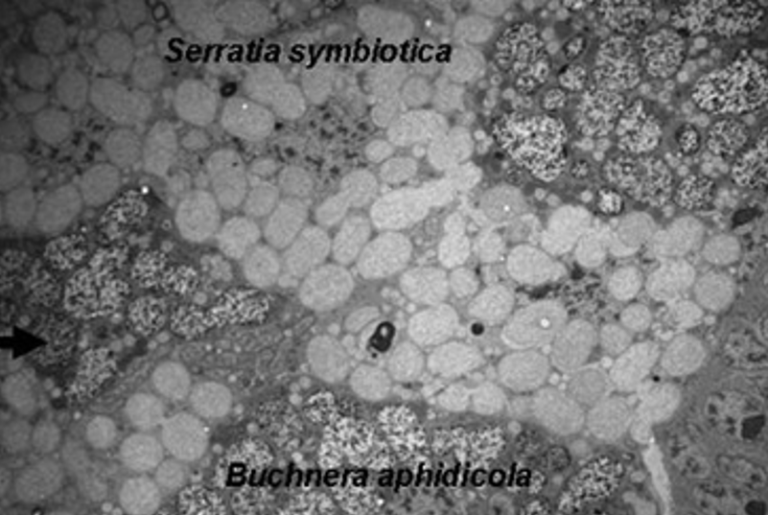
    by Elio — Let me rephrase that. How many genomes does it take for an aphid to make tryp­to­phan? If you thought it was one, you'd be wrong: the an­swer is two, nei­ther be­ing the aphid's. Re­mem­ber that aphids live off plant sap that is poor in some amino acids? And that they get some of the miss­ing amino acids from the me­tab­o­lism of an en­dosym­biont...

  • Gul­liver and the Lil­liputians

    by Elio and Merry — "Two ar­chaea walk into a bar and the bar­tender says…" No, we don't have an end­ing for this joke (tell us if you do!), but if the tem­per­a­ture of the bar were around 90°C and the lo­cal­ity a hy­drother­mal vent off Ice­land, there is a chance that the pair saun­ter­ing in could be...

  • All in the Fam­ily – An­other Up­date

    by Elio — One of the most cu­ri­ous phe­nom­ena we have re­ported here is that of bac­te­ria liv­ing in­side the mi­to­chon­dria of a tick. The name given to these bac­te­ria is Midichlo­ria mi­to­chon­drii (the genus name al­lud­ing to the midi-chlo­ri­ans in Star Wars). This sur­pris­ing find­ing was con­fined to a sin­gle species of hard ticks (Ixo­di­dae). A new re­port tells us that seven other species of re­lated ticks also...

  • Fun­gal Cuckoo

    by Elio — Cuckoo birds have an un­sa­vory rep­u­ta­tion for lay­ing their eggs in some­body else's nest. There the eggs are tended with care by duped sur­ro­gate par­ents. When hatched, the young cuck­oos un­cer­e­mo­ni­ously push their nest­mates over the edge and, in a case of con­sum­mate avian chutz­pah, open their maw to...