
The Two Faces of Colibactin
Noteworthy
Two decades ago, colibactin – a genotoxic natural product – broke into the scene with bad news. Its ability to break apart DNA from eukaryotic cells, coupled to its production by strains of the intestinal resident E. coli raised the specter of a possible involvement in colon cancer.
Then, in 2022, came a finding that seemed to redeem the molecule. Its genotoxic activity induced the SOS response in numerous bacteria. Consequently, colibactin producers play an important role in shaping the composition of the microbial communities where they reside. Therefore, viewing colibactin in the human gut primarily as a carcinogen is not the whole story. As Roberto wrote in a post describing the chemical ecology of colibactin, thinking of this natural product as having evolved to attack eukaryotic hosts is "barking up the wrong ecological/evolutionary tree."
But the bad news on colibactin re-emerged just last year. Results from a large study pointed to an association between the type of mutations caused by colibactin and early-onset colon cancer. It seems that the worrisome increase of the disease over the last twenty years among those under fifty may be linked to exposure to colibactin during the first few years of life.
However, there may still be a good side to this molecule. A recent and noteworthy study of colibactin production shows convincingly that the molecule has a beneficial role; it defends a host against a pathogen. At least in honeybees.
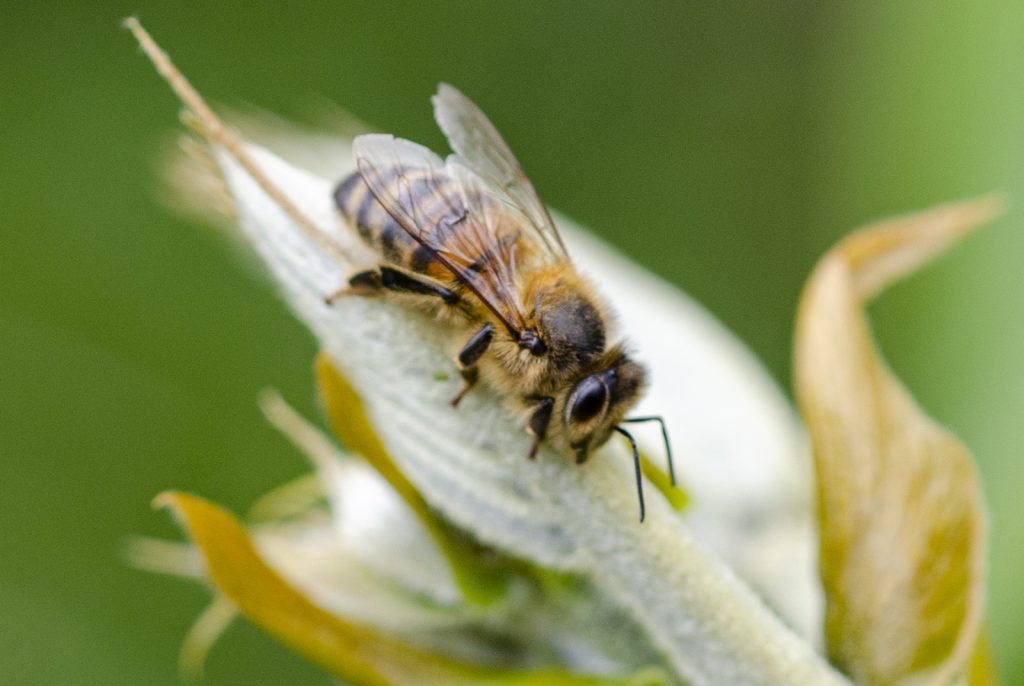
The honeybee Apis mellifera. ©Roberto Kolter
The honeybee gut microbiome is much less complex than that of humans, making it a great model to define the ecological roles of individual bacterial strains or even molecules. The honeybee has a relatively simple gut microbiota dominated by five bacterial taxa: Snodgrassella, Gilliamella, Bombilactobacillus, Lactobacillus and Bifidobacterium. With members of these taxa present in their gut, honeybees do well. Until they become infected by Serratia marcescens. However, if they also harbor a strain of Frischella perrara that makes colibactin, honeybees resist the pathogen. The ecological context clearly matters; axenic bees colonized with only the colibactin producer lose fitness. But when the colibactin producers are part of the complete microbiota (whose members are colibactin resistant), colibactin protects from the pathogen.
Now, back to colibactin-producing strains in the human gut and some speculation. It is possible that humans harbored such strains for millennia and that they contributed to colon cancer all along but at a low frequency. But, perhaps, these strains also offered some protection from pathogens. Then, some major change in the natural history of our species changed about seventy years ago that led to changes in the composition of early-life gut microbiota. Think: antibiotic overuse and abuse. This change could have led to an increase in abundance of colibactin producers in the guts of countless children from then onwards. And then, starting two decades ago, the negative consequences begin to emerge... Just some thoughts to consider.
We'd be delighted to hear from you! You can comment below, send us an email or reach us via Bluesky or Mastodon. Please subscribe to get email notifications of our new posts.




George O'Toole commented on bluesky:
And a role in CF:
https://journals.asm.org/doi/10.1128/jb.00190–26
Thanks for bringing this to our attention George! The Colibactin story keeps getting more and more interesting. We were already considering pointing out your paper in a follow-up Noteworthy! – the STC team.