
Streptomyces Atlas
by Mechas and Roberto
Most of the natural products in clinical use come from Actinobacteria. Among the Actinobacteria, soil Streptomyces species stand out as an invaluable source of bioactive molecules, such as antibiotics, antifungals, anticancer agents, and immunosuppressants. In addition to being prolific producers of secondary metabolites, these microbes also have complex regulatory systems.
As in so many areas of biology, genomics has also become central to the study of Actinobacteria. Since the completion of the first genome of the model organism Streptomyces coelicolor some 25 years ago, the number of available genomes and tools to analyze them has grown immensely. But more data also introduces new and greater challenges. Among these is understanding how these microbes, whose genomes contain large arrays of genes for natural products, regulate and express this information to optimize growth and metabolite production.
Which is why a new tool for assessing regulatory networks, StrepTRN, is such a welcome addition to the field. Thanks to a collaboration among Wageningen University, DOE Joint Genome Institute, Leiden University, and the University of Liege, researchers generated a browsable atlas of Streptomyces and related actinomycetes. The goal is to provide researchers with a tool to explore transcriptional control, from genes to networks, that may lead to new predictions and a deeper understanding of Actinobacterial biology and metabolism.
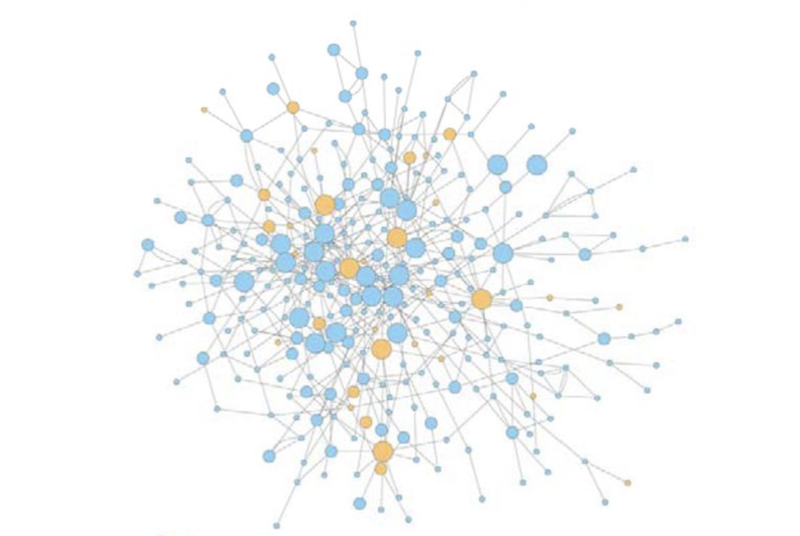
Regulatory network of transcription factor (TF) cross-regulation. Nodes represent TFs; edges indicate TF binding sites (TFBSs) identified upstream of other TFs. Node size reflects the number of TFBSs (small, medium, large), and orange nodes denote TFs with previously characterized binding sites. Source
In the words of our close friend and senior author Gilles van Wezel: the aim is for "StrepTRN to serve the community in much the same way as StrepDB: as a browsable, searchable entry point for exploring Streptomyces biology, in this case focused on regulatory networks."
What is best is that StrepTRN is a community resource, open for all to use, that will be continuously updated. We urge all those interested to explore this marvelous online resource in their search for answers regarding Actinobacteria and, why not, perhaps the next promising natural product.
We'd be delighted to hear from you! You can comment below, send us an email or reach us via Bluesky or Mastodon. Please subscribe to get email notifications of our new posts.


