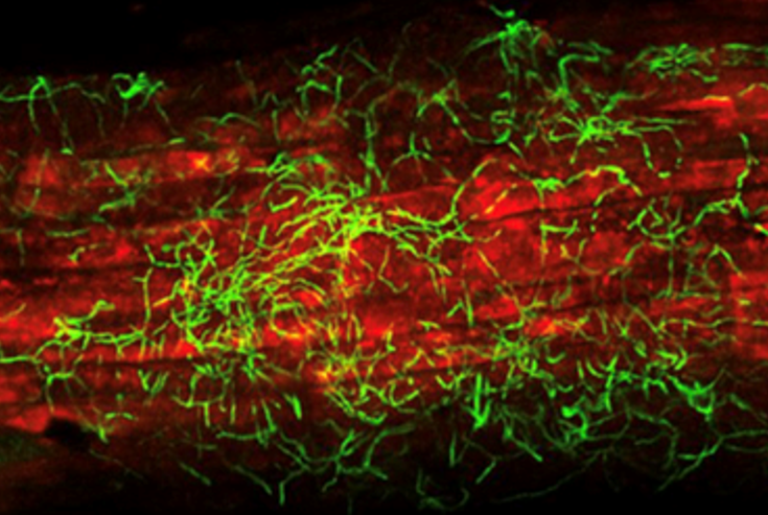
Human Gut Microbes
Noteworthy
Sampling human stools as a proxy for the contents of the colon is useful because the procedure is relatively easy, noninvasive and scalable. But the utility of this approach is limited, of course, because stools are the product of a very complex process ("turdopoiesis" as Elio jokingly named it). That this long-standing issue continues to be discussed among investigators is evident in a recent review by Rebecca Lewandowski, who brings to the field the fresh perspective of a newcomer. While noteworthy, that's just our an introduction.
A decade ago, here at STC, Elio addressed the conundrum of stool samples vs. gut microbiota in "A Passing Observation" stating: "Nothing is easier to get hold of than samples of human feces and nothing is harder to obtain that samples from undisturbed portions of the gut of people... [Feces] do not reflect the major aspects of composition and transactions of the intestinal microbiome in its many compartments." He went on to offer some possible sampling strategies to overcome these problematics. One of his suggestions was to sample during "hurried post-mortems."
Which brings us to today's noteworthy story. In last Monday's post, Roberto described the work of Peg Haldeman and Ed Moore in setting up The Anaerobe Lab. Turns out, back in the early 1970s, Peg and Ed were also interested in finding if bacterial isolates from stool samples were representative of the human gut microbiota. They approached the question, as Elio suggested decades later, by sampling during autopsies. This anecdote is told by Jessica Snyder Sachs in Good Germs, Bad Germs. As we could never tell it as well as she does, we quote her:
"[Moore and Haldeman] would drive up to Baltimore to camp out in a cheap motel and wait for a call from the medical examiner... Their solution was to get scrapings from freshly dead but otherwise healthy victims of Baltimore's mean streets — primarily homicide victims and traffic fatalities. As it turns out, all the microbes growing in contact with the intestinal lining could be found in human stool."
The creatures present in their microbial menageries were the same, whether from stool or freshly dissected colons. Quite fascinating approach to field work in microbial ecology. Peg and Ed, true pioneers in their field!

© Microbial Menagerie by Roberto Kolter
We'd be delighted to hear from you! You can comment below, send us an email or reach us via Bluesky or Mastodon. Please subscribe to get email notifications of our new posts.