
STC, Writing & Me
by Roberto
It's time to get back into the swing of things at STC. Our vacation, self-prescribed as well as self-described as well-deserved, is over. All things must pass. Right up front I will admit that this, my first post-vacation post, is only tangentially microbiology related.
Some months ago, the exact number now occluded by increasing lapses in memory, I found myself in Miami, of all places. The reason: the annual meeting of the Editorial Committee of the Annual Review of Microbiology. Such meetings energize me; there's an ample supply of thoughtful discussions on fascinating and timely topics to consider for inclusion in the journal. Plus, it's a wonderful way to meet new colleagues and catch up with old friends.
This story was sparked by post-dinner questions asked of me by my good friend Andy Goodman: "So, Roberto, how have you taken AI? Are you staying away or are you fully immersed?" To which I quickly replied: "Dabbled in it. At times it's a great tool, but I guess I remain somewhat skeptical." What I did not admit at the time was that, a few months before, I had done the experiment. Perhaps I should say, I could not resist the temptation of doing the experiment.
Yes, I had to do it. Right? Why not? Into ChatGTP went the PDF of an article I had enjoyed upon superficial reading. Then I gave ChatGTP these explicit instructions: "I write posts in the blog 'Small Things Considered' (https://smallthingsconsidered.blog). My posts are authored 'by Roberto.' Let's call that 'my style.' Trained on 'my style,' write a 500 to 1000-word post summarizing the results from this pdf."
I watched in dismay as a few seconds later the beast spit out what appeared to be a cogent piece summarizing the paper. Even though I knew it would be fast, the brutality of its speed still hit me hard. But then I read the piece carefully. Ugh! It might have been factual, but it certainly was not my writing. Not even close. So yes, I remain skeptical and firmly committed to spending hours writing instead of seconds waiting for a ChatGTP-generated post. For now, STC, you're stuck with "me writing."
Why? Old habits die hard. I've loved writing since forever and have felt that AI should help in many tasks. But it should not supplant my writing. And I have felt this way for decades.
"Decades?" you might wonder. Yes, five at least. Half a century, even more. And here's the partial proof.
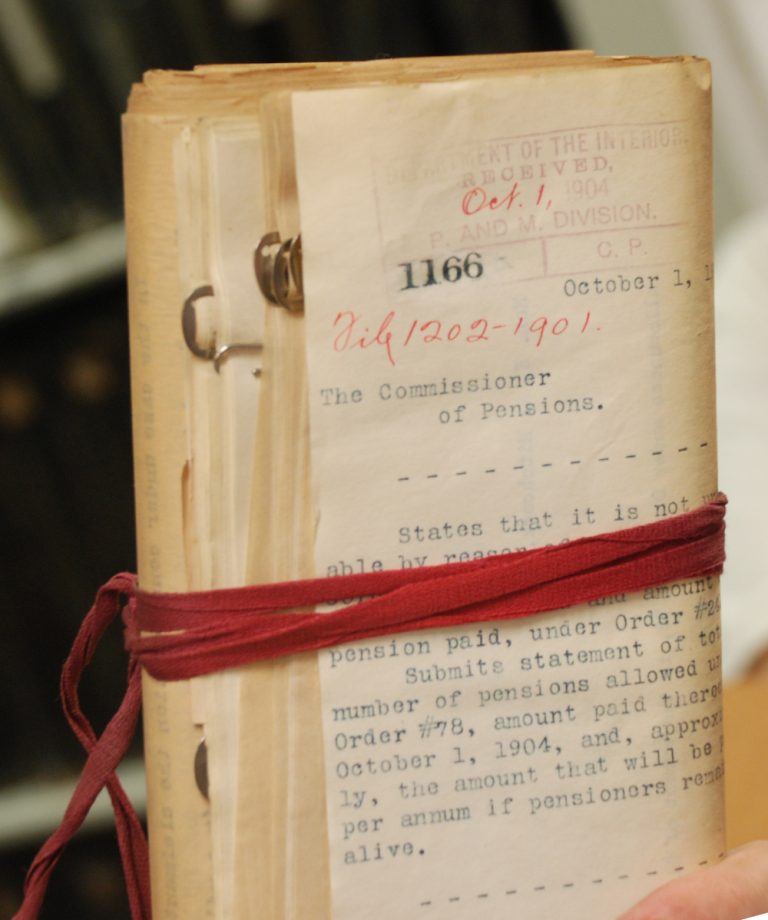
Last year, in fulfilling my daughter's request, I wrote a lengthy memoir. A fun-filled if arduous task for which I relied on re-reading reams of ancient letters. Unfortunately, the nature of old-fashioned letter exchanges is that one ends up only with the letters received. Thus, the proof is only partial. I can only try to recall what I must have written based on the answers I received. Still a fun endeavor. And yes, there was a time when one had so much time in one's hands that daily letter writing – in cursive handwriting at that – was simply part of what we did. While at the same time carrying a six-course load at university.
I'll cut to the chase. It's January 1972; it's the second semester of my freshman year and I am taking an Introduction to Psychology elective. I feel simultaneously fascinated and threatened by the professor's ramblings on "artificial intelligence" and the "Turing Test." So, I run to my dorm room, pull out pen and paper, and proceed to write several pages on my reactions to the subject matter. I place the ultra-thin sheets into an Air Mail envelope, address it to my dear friend Elena in Guatemala and wait a couple of weeks for her response. How I cherish reading it when it arrives. And then it sits, awaiting re-reading until 2026.
That's when I get goosebumps and tears roll down my cheeks. Here is her response, translated:
Regarding the relationship between humans and machines, one fundamental truth stands out to me: humans created machines – computers – and, consequently, the very purpose of these machines depends on humanity. Yet, in this alienated and alienating world, it is all too easy to fall into an alienated relationship with machines. It is easy to let the created product come to reign over its creator – to allow the productive relationship to be inverted, such that machines come to define the very meaning of human existence. And this is already happening.
It matters little that machines can perform calculations that lie beyond the capacity of the human mind. Machines must always be programmed; they cannot transcend the parameters that have been set for them. In my view, there are three irreplaceable human qualities:
1. Self-awareness. Humanity represents life conscious of itself.
2. Imagination. This enables humans to be creators – and, in a deeper sense, it is through imagination that a human being truly becomes human.
3. Reason. It is significant that machines have been labeled "artificial intelligence." For that is precisely what they are: intelligence – the ability to manipulate concepts toward a practical end – and, generally speaking, an intelligence superior to that of humans. However, reason – defined as the capacity to comprehend and penetrate the very essence of things – is a faculty that only humans can cultivate. The fact that our world is currently so irrational is a separate issue; the potential for reason remains within us.
I believe it is crucial to maintain a clear understanding that "artificial intelligence" exists to serve humanity – that machines should not be treated as ends in themselves but rather developed only insofar as they fulfill human needs. Regrettably, in our society today, technological progress has already become an end in itself.
Here is her last paragraph, photographed from her original handwritten letter in Spanish...

Recall the date, 1972. Fifty-four years ago, two teenagers having a long-distance conversation. Because we could never have imagined the world of sound bites, tweets and viral videos, we wrote long letters instead. It's the memory of such thoughtful writing, its power and its beauty, that will keep me writing my writings.
We'd be delighted to hear from you! You can comment below, send us an email or reach us via Bluesky or Mastodon. Please subscribe to get email notifications of our new posts.


1954, Norbert Wiener, The Human Use Of Human Beings:
One may get a remarkable semblance of a language like
English by taking a sequence of words, or pairs of words,
or triads of words, according to the statistical frequency
with which they occur in the language, and the gibberish
thus obtained will have a remarkably persuasive similarity
to good English.
(I only have the 1954 edition, it may also appear in the 1950 first edition.)
Hello BKS! Great quote... Thanks for alerting us (me at least) of the existence of this book. A cursory look at its content (I just downloaded the 1950 edition here) already makes it feel like "good reading." Keep sending us feedback! ‑Roberto
Inspired by the "ancient letters" that you have kept, now that I have also retired, I will be taking those out and re-reading them. Thank you for all the STC posts, I will now have more time to read them! Please continue writing 🙂
Hello Hui-Min! Thanks for the comment! Mysterious time, whatever its real meaning, is of the essence. It makes me happy to know that you now have more time. And time for reading (and thinking)! Congratulations! ‑Roberto