Dying Sea Stars
Noteworthy
Oceans cover most of the Earth's surface and contain more than 97% of all our water. The oceans' importance in supporting life on our planet, in regulating the climate, and as a home for a vast amount of biodiversity is undeniable. Yet, as land animals, we remain largely unaware of much of the ongoing beneath the oceans' surface.

Sunflower Sea Star. Source
A recent publication highlights one such case. Since 2013, an epidemic called sea star wasting disease (SSWD) has devastated populations of sea stars along the Pacific Coast of North America. The sunflower sea star (Pycnopodia helianthoides), which is particularly susceptible to the disease, was once abundant from Baja California to Alaska but is now almost extinct. But why should we be concerned with sea star mortality? As with most species, sea stars are important for the ecology of their environments. They prey on and control populations of sea urchins, which in turn graze on kelp forests. The loss of sea stars translates into growing sea urchin populations and loss of kelp forests, which house thousands of marine species and store carbon.
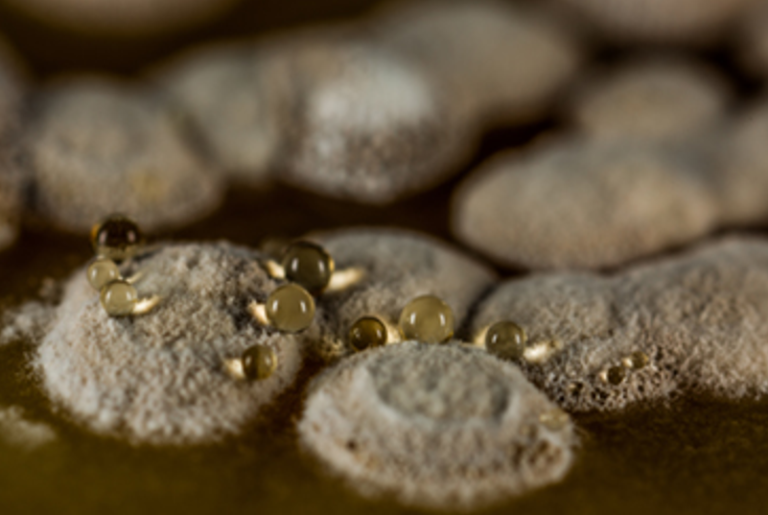
In a recent study, researchers from Canada and the United States pinned down the culprit involved in this wasting disease: Vibrio pectenicida FHCF‑3. The authors carried out four years of controlled exposure experiments in which they exposed healthy sea stars to diseased samples. They followed with sequence analysis of diseased sea star samples and identified V. pectenicida as the dominant bacterium. The re-inoculation of a& V. pectenicida isolate into healthy individuals resulted in diseased sea stars, fulfilling Koch's postulates.

Electron micrograph of a negatively stained cell of the king scallop (Pecten maximus) pathogen V. pectenicida A365T (Marine Broth growth) showing the single polar flagellum. Bar, 1 µm. Source
Uncovering agents of disease in these sea stars required careful observation in the field and experimental work in controlled settings. In the future, it will be possible to screen and track the pathogen and hopefully develop conservation strategies to maintain healthy coastal marine ecosystems.
Do you want to comment on this post? We would be delighted to hear from you! Please use the section below, send us an email or reach us via Bluesky or Mastodon. Feel free to subscribe if you'd like to get email notifications of our new posts.