Fungus Helps Carnivorous Plant Digest Prey
by Kevin Blake
It is well-established that microorganisms help vertebrates digest food, such as the bacteria in our gut breaking down complex carbohydrates. But do carnivorous plants engage in similar digestive collaborations?
A new study, headed by Isheng Jason Tsai of the Academia Sinica in Taiwan, describes how an acidophilic fungus that resides on the leaves of carnivorous sundew plants helps them digest insect prey.

Fig. 1. (a) Drosera spatulata carnivorous sundew plant. (b) Close-up of stalk glands with secreted mucilage. Source. Frontispiece: A sundew plant traps a fly. Source
Sundews get their name from the sticky drops of mucilage that hang from the glandular tentacles covering their leaves (Fig. 1). Small insects are attracted by the sweet-smelling drops and get stuck on them, as if it were flypaper. Sensing it has trapped a meal, the sundew's tentacles then bend inward, bringing the insect into contact with more mucilage-covered glands. Eventually the insect dies, either through exhaustion or asphyxiation, and enzymes within the mucilage begin digesting it.
Although the mucilage is acidic, and as inhospitable to many microorganisms as it is to insects, Tsai and colleagues hypothesized that some species could not only survive within the mucilage but thrive by helping the carnivorous plant digest its insect prey.
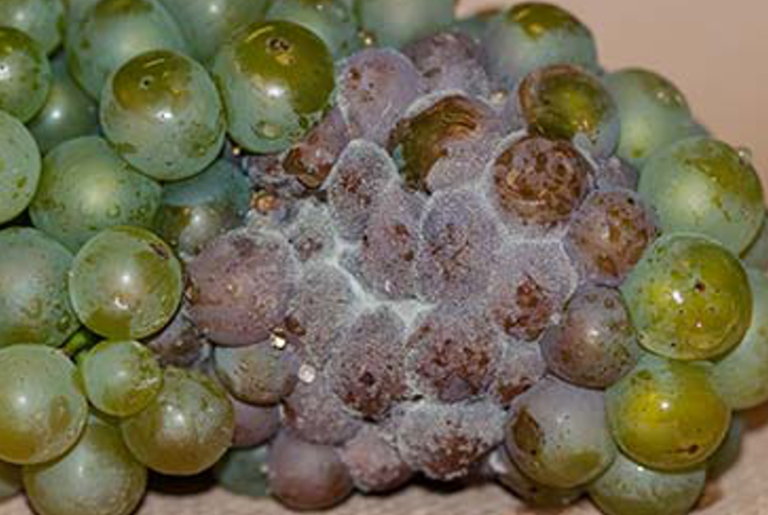
Using 16S rRNA and ITS amplicon sequencing, the authors found that nearly half of the bacteria and fungi living on the leaves of the sundew Drosera spatulata belonged to the fungal species Acrodontium crateriforme. A. crateriforme is acidophilic, preferring to grow at low pH, such as is found in D. spatulata mucilage. In addition, using scanning electron microscopy, they observed the fungus growing on the plant's mucilage-secreting glands.
To determine if the fungus actively contributes to prey digestion, they supplemented mucilage with A. crateriforme. This resulted in significantly faster protein digestion than sterile mucilage alone. Further, they observed that sundew leaves colonized by A. crateriforme capture prey, digest it, and then reopen faster than uncolonized leaves.
The authors also provided genetic evidence that this fungal-plant collaboration has undergone selection to increase the fitness of the pair. The A. crateriforme genome has lost genes encoding enzymes that degrade plant cell walls – a signature of symbiotic fungi. It also encodes two proteases that are absent in related species and are generally rare in fungi but could help in prey digestion. Additionally, on the sundew side, the presence of the fungus primes almost half of its genes involved in digestion, reducing the time required to turn those genes on and resulting in faster digestion.
These results show that the Drosera-Acrodontium relationship is cooperative and mutualistic. Because of the complex interactions and metabolic interdependencies, the pair can be considered as a singular entity – a "plant holobiont" – rather than singular organisms.
The authors propose that this partnership could be an ideal laboratory system for studying plant-microbial partnerships. First, both organisms can be grown separately or together. This permits direct comparison of their metabolic activities and fitness when working alone versus together. Second, although the digestive mucilage of other carnivorous plants – including bladderwort, corkscrew, and pitcher plants – also contain microbial communities, they are generally highly variable, diverse, and rarely dominated by a single microorganism. In contrast, the much simpler Drosera-Acrodontium system is easier to manipulate and likely contains stronger signals of cooperation.
This fascinating symbiosis shows that wherever there's digestion—even in its most unusual forms, such as on the surface of plant leaves—microbes will be there helping the process along.

Kevin Blake is a Scientific Editor at Washington University in St. Louis, in the Department of Pathology & Immunology. He earned his PhD from WashU in 2023 where, in the lab of Dr. Gautam Dantas, he studied antibiotic resistance, microbiomes, and microbial ecology.
Do you want to comment on this post? We would be happy about it! Please send us an email, or comment on Mastodon or Bluesky.