Putrescence and Poetry
by Corrado Nai
Spoil(er) Alert: The short time-lapse film Wrought by Anna Sigrithur and Joel Penner dissects decomposition in a mesmerizing way.
Flickering stars filigree the cosmic void. A green, incandescent planet bursts on the screen. We didn't know we were watching a science fiction movie. Drumrolls climax into the next frame. Suddenly, fiction is stripped away, and in a heartbeat we are thrown into the heart of science and culture. We are not staring at the infinitely large but observing the minuscule at work.
"Fester… molder… ripen… putresce… go bad. This language has a lot of words for rot," narrates a soothing, playful voice over a giant close-up section of a kiwi carpeted with mold. "But is it due to appreciation, or squeamishness?" We feel that an answer is soon to emerge from the compost heap. The movie doesn't tell. It shows.
We are staring at spoilage, fermentation, and composting. It's enlarged decay of fruits, vegetables, and foliage, accelerated decomposition of plants and animals. Wrought (2022) is an award-winning short time-lapse film exploring rot, fermentation and decay (18', Canada, Biofilm Productions; free to watch on Vimeo) co-directed by Anna Sigrithur (voice, script) and Joel Penner (videography, editing).

Fig. 1. Watermelon juice flow. When juices from a fermenting watermelon looks like cosmic landscapes. Source (courtesy of Anna Sigrithur/Joel Penner/Biofilm Productions). Frontispiece: Kombucha mother. A floating planet (in fact, a fermenting jar of kombucha). Source (courtesy of Anna Sigrithur/Joel Penner/Biofilm Productions)
The narrator helps us navigating amidst floating colonies of bacteria, minuscule icebergs forming disproportionate snowflakes. It's not lunar landscapes and cosmic gases we are watching, but putrid mush leaking from an overripe melon. "Don't turn away in disgust," invites the voice. "Come a little closer and see the universe that unfolds in these forsaken places."
The voice investigates while images drift, magnifying and speeding up time without rushing for an answer, hinting at conclusions and accepting alternative interpretations. The movie distances itself from the fictional dichotomy of good and bad, does not fall prey to trivial dualities. We should all embrace being part of nature's cycle, the voice reminds us, well knowing that not all steps come without pain, struggle, or intrinsic selfishness. "When mold colonizes contested landscapes, staking its claim on nutrients I had saved for myself, I declare that things are going bad."
"But would rot, if called by any other name, still reek?" While waiting for answers, new perspectives arise. We are looking at a jar teeming with transformation. When yogurt and cheese are "a taste for milk shared by humans and bacteria," we know we are up for a narrative treat. When fermentation is "spoiling's cultured twin, […] the hopeful treaty between human and microbe that says, 'eat this now, so I may eat it later,'" we realize we are thrown into something bigger than ourselves, even if inconspicuously small.

Fig. 2. FFF logo. Logo of Fungi Film Festival. Source (courtesy of Peter McCoy)
The leap from fermentation to putrescence is seamless; the hope, which decomposed matter wrought into new life brings, doesn't let us wait. No film before Wrought has woven decay, fermentation and decomposition with such rich narrative and vivid images. It's no wonder Wrought won numerous accolades. The movie, seven years in the making,was presented at the third edition of Fungi Film Festival (FFF) in December 2022, "world's only film festival dedicated to the beauty, weirdness, and human influences of mushrooms, lichens, and microfungi" initiated by Radical Mycologist Peter McCoy. The organizers describe the festival as a "niche" one, which would be amusing if it wasn't sadly accurate. Imagine how vaguely directed would a director feel if encouraged to submit a film to an Animal or a Plant Film Festival.
Wrought is excellent in portraying mold and decay with imageries and narratives unburdened from overly negative connotations, as so often the case when fungi enter the arts and works of fiction. (The author of this blog and the directors of Wrought are well aware that fungi are just some of the players in the ecosystem of decay.)

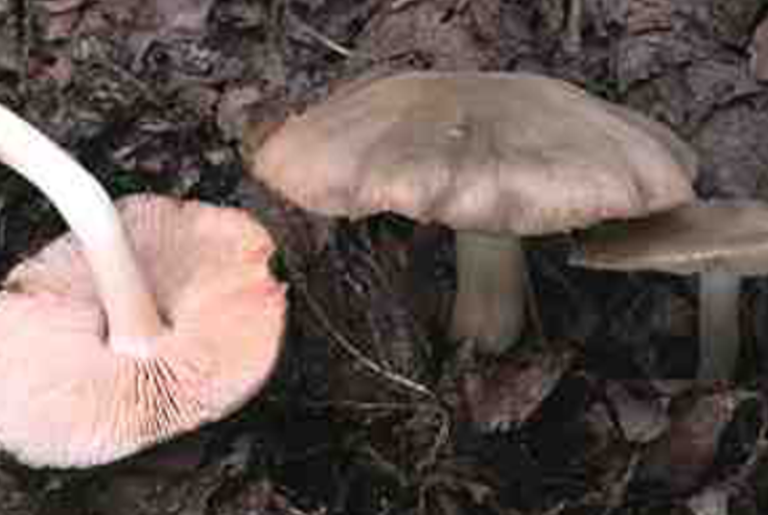
Fig. 3: Assorted Mushrooms New beginnings: Mushrooms sprouting from vestiges of decay. Source (courtesy of Anna Sigrithur/Joel Penner/Biofilm Productions)
Because there is no film critique without criticism, I will say that the artistic choice to switch between the "I," "you," and "we" perspective is not always clear. The images have (very) rare flaws, too; their power is diminished when they are forced into fitting the narrative, for example when reverse lapses of decomposition are used to portray growth of new life. Do not let these criticisms spoil the absolute joy of watching Wrought.
"In a world obsessed with growth, we overlook tender possibilities of decay," says the movie. Don't be fooled: it's not hopeless romanticism nor naïve optimism. Wrought does not steer clear of the possibilities of sheer horror. When the narrator says that "fermentation leavens and spoilage threatens, while compost reincarnates," she doesn't neglect the perspectives of parents staring at the rotting flesh of their offspring. "Is this transformation metamorphosis or ruin? The answer depends on where, within rot's vast network, we stand. […] But come my time to dissolve, I am far less brave."
Wrought mesmerizes and dissects. The movie fails to do so aseptically as it teems with life and deconstructs decay into a new vocabulary. Wrought is visual decadence and literary effervescence, pure poetry in images and words.

Corrado Nai (@jan_corro) is a former fungal researcher turned fungal communicator. At FEMS and curator of the #FEMSmicroBlog by day, writer about all things fungi by night. Creator of the Wikipedia page on «Fungi in art». He lives in Jakarta with his wife and daughter.
Do you want to comment on this post? We would be happy about it! Please comment on Mastodon or on Bluesky.