Of Terms in Biology: Acetogenesis
by Roberto and Elio
If you are not deeply steeped in microbial metabolism terminology, your first guess at the meaning of acetogenesis might be simply the production of acetate. Is vinegar production, the oxidation of ethanol to acetate by acetic acid bacteria, an example of acetogenesis? Not quite, the ability to produce acetate does not define acetogenesis. By convention, acetogenesis is a term used for the reduction of two molecules of CO2 to acetyl-CoA, in a process that uses inorganic or organic electron sources such as H2 or formate, among others. Acetogenesis takes place via reductive reactions know both as the Wood-Ljungdahl pathway or the reductive acetyl-CoA pathway. Collectively, microbes able to carry out acetogenesis are called acetogens. But there is by no means a close phylogenetic relationship among acetogens; they are extremely abundant in many environments and come from very different phylogenetic groups including the Firmicutes, Proteobacteria, Acidobacteria and even Archaea. Acetogens are widespread, occupying many anoxic habitats, such as soils, subsurface sediments, hypersaline waters, and human and termite guts.
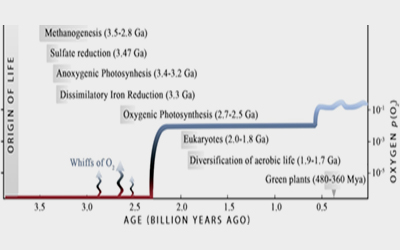
Acetogenesis is likely to have been the first carbon assimilation reaction on Earth, no less, anticipating CO2 fixation by photosynthesis. Its study "is paved with landmark discoveries in the field of microbiology," including the Wood-Ljungdahl pathway, mechanisms of energy conservation, and the generation of a membrane potential.
Importantly, acetogens are facultative autotrophs. Not only can they use a large number of electron donors, they are also facultative heterotrophs and can therefore use a large number of different carbon sources to funnel into the reductive acetyl-CoA pathway. If one were to consider solely the energy derived from autotrophic growth, methanogens (4H2 + CO2 → CH4 + 2H2O; ΔG0 = –131 kJ/mol) would easily outcompete acetogens (2H2 + CO2 → CH3COO– + H+; ΔG0 = –95 kJ/mol). But it is the acetogens' metabolic flexibility what most likely makes them uniquely competitive and which may explain their nearly ubiquitous presence in anaerobic environments. Some acetogens use glycolysis plus the reductive acetyl-CoA pathway, in a process known as 'homoacetogenesis' to convert glucose stoichiometrically to three acetates with an extremely high ATP yield.

Figure 1. The termite Zootermopsis nevadensis. Source
The best studied examples appear to be those acetogens that use hydrogen as the electron donor. Their activity results in the removal of hydrogen from their local habitats, where it can act as an inhibitor of diverse biological functions. At the same time their production of acetate can infuse the same habitat with a useful substrate. Take the case of the xylophagous termites (see this STC post on xylophagy). Termites and their gut microbes digest lignocellulose, the most abundant natural composite material on Earth. This digestion involves a protozoan, which can take up 90% of gut volume and is able to ferment wood polysaccharides. Two by-products of this fermentation are CO2 and H2. For a long time it's been known that acetogens are involved in converting these to acetate. This has two benefits, it reduces the hydrogen concentration, thus protecting the termite, and it provides additional acetate for the termite to grow on. Initially, the termite gut acetogenesis was ascribed to abundant acetogenic spirochetes also present in the gut. But, using very clever single-cell transcriptomics and FISH (fluorescent in situ hybridization) a new yet-to-be-cultivated acetogenic deltaproteobacterium was discovered. This bacterium lives in very close association with the protozoan, right on its surface. There it can presumably immediately convert the CO2 and H2 into acetate. So, not only are acetogens metabolically diverse, they also know where to live. It's all about location, location, location…