Stan Falkow, a Modern Koch
by Elio
Let's risk an exaggeration. Stanley Falkow, whose recent death we mourn, could be called the modern embodiment of Robert Koch. The risk here seems reasonable because the parallels are remarkable. Like Koch, Falkow started a whole school of research, this one focused on molecular bacterial pathogenesis. His alumni, many who are now luminaries in their own right, are numbered in the hundreds. Of course, some of the recent stars of the field came from elsewhere but that was true in the late 1800's as well.

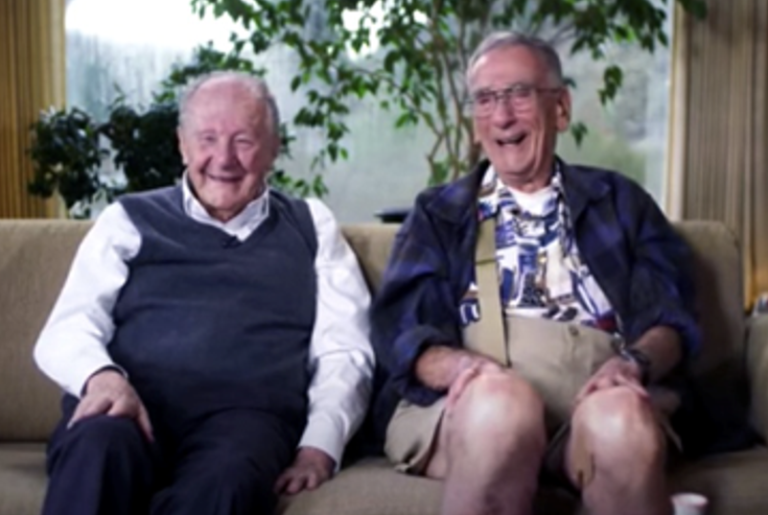
Stanley Falkow. Source. Frontpage: intracellular niches of M. tuberculosis. Source
The Koch analogy is strengthened by Falkow's proclamation of the "Molecular Koch's Postulates", wherein he laid down the law for how to prove the nature of bacterial virulence factors using genetic tools. Just like Koch's postulates, Falkow's needed later adjustments, but at the time of their inception, they played a crucial role in the development of modern microbial pathogenicity.
Falkow's origins also point to a connection with the 19th century, as he started out doing clinical lab work, a dominant concern of microbiology in Koch's days. He only later entered into the mainstream of modern microbiology, starting out with key experiments on the nature of plasmids. In time, his lab turned to using bacteria mutants to establish the nature of virulence factors The first one was Invasin, a protein required for the entry of Yersinia pseudotuberculosis into host cells, which was discovered by his postdoc Ralph Isberg. He recently wrote a heartwarming and personal account of Falkow's role in the discovery.
All who knew Falkow, some of us included, were enchanted in his enthusiasm, his wit (sometimes expressed in, let's say, dubious words), and his concern for others. To know him was to admire him.
Falkow wrote two pieces for this blog, both notable for his willingness to share early experiences, and to do it in his unique 'voice.' One is concerned his early contribution to the modern field of fecal transplants, the other on his qualms when starting out teaching large classes.
He leaves a large void.