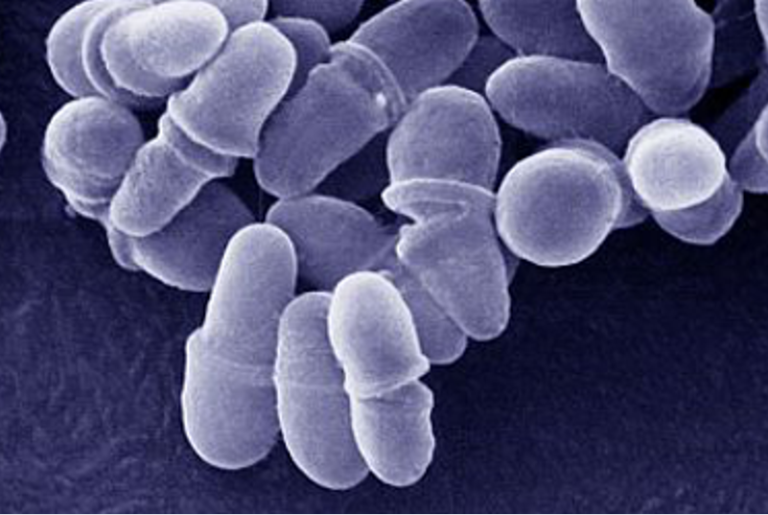
Let's Get Ready, Xylella Has Arrived in Europe
We are pleased to offer a post from the blog by Mercè Piqueras, La lectora corrent (The Common Reader), translated here from Catalan by Elio (with the help of Google Translate).
by Mercè Piqueras
As a good Mediterranean, I have always used olive oil, preferably the extra-virgin kind. Now I am thinking about stockpiling it as its price will surely skyrocket if the bacterium Xylella fastidiosa continues to spread unhindered. Over the last four years, it has attacked two million olive trees in Italy. A rise in the price of olive oil, however, would be a small evil compared to the ecological disaster that this plague might cause in Mediterranean countries.

Figure 1. Olives trees in the Salento, Italy, infected by Xylella fastidiosa. Photo: courtesy of Gianpietro Lipparini
Since 2013, Concepción Rubies, a phytopathologist at the University of Bologna, has kept me informed of the development in Italy of a disease with the descriptive name of olive quick decline syndrome (OQDS, in Europe it is usually referred as CoDIRO disease from the Italian complesso del dissecamento rapido dell'olivo). Its causal agent, X. fastidiosa, is well known in the Americas because it causes plant plagues that include Pierce's disease in California grapevines and citrus variegated chlorosis disease in Brazil.
Figure 1 shows a field of olive trees in the Salento area, in the Italian province of Lecce (in the Apulia, the region in the heel of the Italian peninsula's boot), that is most affected by the devastating action of this bacterium. The olive trees in the photo have not suffered from a fire, as it may be assumed from their appearance; their leaf scorch was caused by the infection.
X. fastidiosa, a bacterium in the class Gammaproteobacteria that has caused these ecological disasters, colonizes two distinct habitats: the xylem of the plants it infects (the xylem is the tissue that in vascular plants transports water and nutrients from roots to shoots and leaves), and the foregut of xylem-sap feeding insects, the vectors of the bacterium. In many cases, the population of bacteria within the xylem does not reach a large size and the infected plant remains asymptomatic. Sometimes, however, the bacterial population increases greatly, which leads to the obstruction of the xylem vessels (Figure 2). This prevents water and nutrients from reaching the leaves, and the plant begins to dry and decay. Extensive desiccation of leaves and twigs are the most visible symptoms. In the early stages of the infection, symptoms appear mainly on the upper part of the canopy. Over time, they become more and more severe and spread to the rest of the crown. The death of shoots, twigs, and branches can be followed by the death of the entire tree. According to Giovanni Martelli, professor emeritus of plant pathology at the University of Bari, by 2016 there were already more than 2 million infected trees, and another 10 million were at risk of becoming infected.

Figure 2. Scanning electron micrograph of X. fastidiosa in xylem vessels of an infected sweet orange leaf (ca. X10,000). Photo by E. W. Kitajima (ESALQ/USP/Brazil). Source
Until not so long ago, X. fastidiosa had only been found in infected plants in the Americas, namely in the United States, Mexico, Costa Rica, Venezuela, Peru, Argentina, and Brazil. It was then detected in Taiwan and in some imported products in France, but those were isolated cases. In October 2013, it was detected for the first time in Lecce in an area close to some ornamental plant nurseries from which the bacteria may have escaped. From this first spot of infection, the bacterium has spread at a speed of 30 km (18 miles) per year. Its presence in Iran and Turkey has also been reported, although there are still no genetic studies that confirm that it is the same species. In 2015, X. fastidiosa was detected in Corsica, at first in ornamental plants, but later also in plants native to the Mediterranean, such as rosemary, spartium, and oleander. In November 2016, the first cases of Xylella infection were detected in the Balearic Islands – Mallorca and Ibiza – in ornamental plants. By January 2017, the bacterium had spread to fruit trees and also to the island of Minorca. A few months later, the bacterium was first seen in the Iberian Peninsula, infecting almond trees in Guadalest, near Alicante. (Fig. 3).
In contrast with many other pathogens that have specific hosts, Xylella can infect a wide range of plants. Up to now, 309 host plants are known throughout the world, distributed in 63 families; The European Union has released a list of plant species susceptible to one or more subspecies of the bacterium. The list is updated periodically.

Figure 3. Vall de Guadalest, País Valencià, Spain. Photo by M. Piqueras, April 2016
When the insect vector sucks the xylem of an infected plant, it also swallows the bacteria, which colonize its foregut and can thus be passed to other hosts. Xylella can live in the digestive tract of several species, which has contributed to its success as an infectious agent. However, the colonization of the xylem does not always cause the disease. As in some human infectious diseases, there are asymptomatic or healthy carriers that, despite being infected, never show symptoms. In addition, although Xylella can colonize so many species of plants, the development of symptomatic infections varies with the genetic group of the bacterium (subspecies and strains). For example, the one that is destroying olive trees in Italy is a strain of Xylella fastidiosa spp. pauca, native to South America. But this same strain can also infect oleanders. Therefore, it is difficult to predict which species will be attacked by a given strain of Xylella.

Figure 4. Olive branches infected by Xylella fastidiosa. Source
Any sucking insect feeding on plant xylem could act as the vector of Xylella, but some species spread it faster. For example, in California, the glassy-winged sharpshooter (Homalodisca vitripennis ) is most effective. In Italy, the one that has proven to spread fastest among plant species and to cause CoDIRO is Philaenus spumarius, the meadow spittlebug. The name that identifies this species (spumarius ) refers to the foamy nest that its nymphs produce to protect themselves from predators and to keep the moisture and temperature necessary for their development (Figs. 5a + 5b).
Treatment of the disease and controversy in Italy
Unfortunately, by now there is no treatment for CoDIRO. The only thing that can be done to control it is to uproot the infected trees and also uprooting the vegetation that grows around and that could be infected asymptomatically. In fact, it can take a year and a half after a bacterium infects an olive tree for the first symptoms to appear, time enough for the tree to become a disease reservoir. International protocols to act against infections such as that of Xylella exist, and the European Food Safety Agency responded immediately by preparing a report for the European Commission on the measures to be adopted. The Commission then issued urgent measures to stop the dissemination of the disease. These measures are based on an integrated pest management strategy, basically consisting of the identification and elimination of the vector insect – also at its nymphal stages – removal of infected host plants and in their proximity, as well as establishing Xylella-free buffer zones.

Figure 5a. Philaenus spumarius vector of Xylella fastidiosa. By Charlesjsharp — Own work, from Sharp Photography, CC BY-SA 4.0
Unfortunately, in Italy these measures have been deterred by the pressure of lobbies of olive growers and environmentalists, who opposed the uprooting of the Xylella infected trees. They first claimed that Xylella is not the cause of the CoDIRO, but is an opportunistic bacterium that infected trees made ill by a fungal infection. They also stated that trees that had been cultivated by applying organic farming techniques did not suffer from the disease, a claim that was repudiated by studies carried out in the region. Then came a conspiracy theory, that scientist that had studied Xylella in a laboratory – although some 200 km away from the spot of the first outbreak – were blamed for having released the bacterium in the environment. There was even a rumor about the multinational company Monsanto was trying to replace the olives in the Apulia with genetically modified olive trees that were being produced in Israel. The Apulia's public prosecutor halted the cull of olive trees and ten people were placed under investigation over their handling of the outbreak. The ban was not lifted until July 2016, when the European Commission threatened the Italian Government to report it to the European Court of Justice.

Figure 5b. Philaenus spumarius nymph spittle. By James Lindsey at Ecology of Commanster, CC BY-SA 3.0
In the meantime, an independent study was commissioned to Enrico Bucci, Director of the System Biology program of the Sbarro Health Research Organization Temple University, an expert in scientific fraud detection and analysis. He analyzed meticulously the database containing the results of molecular analyses (DNA by PCR and antibodies by ELISA) aimed at detecting the presence of Xylella in thousands of samples, which had been made public at a special website of the Apulia region. Bucci's research confirmed that the scientists involved in the study of the CoDIRO outbreak were right when they claimed that X. fastidiosa was the causal agent of the disease.
Meanwhile, the disease had progressed, and the European Commission was furious with the Italian Government. Recently, given the danger that the plague can spread across Europe, the European authorities have made a last warning and have given a period of two months to carry out the directives for the containment of the disease.
But there is still hope
When I first learnt about the olive quick decay syndrome, I wondered whether European olive growers would face a situation similar to that of European wine growers faced in the late 19th century, when phylloxera, which, like Xylella, arrived from America, swept most of the European vineyards. (phylloxera, however, is not caused by a bacterium, but a parasitic insect that attacks the roots of susceptible plants.) American strains were resistant to phylloxera and the solution was grafting scions of the European plants onto the roots of native American resistant plants.

Figure 6. Olive trees on the Greek island of Naxos in the Cyclades. Photo: courtesy of M. Florenciano
Surely anyone being acquainted with the history of phylloxera would have thought that this is a predictable disaster and that some variety of resistant olive tree can exist with which to renew European olive groves. Olive growers themselves noticed that not all olive trees respond%shy;ed equally to the infection. The olive cultivar called Leccino was more resistant to Xylella, and the growers suggested that scions of these trees should be grafted onto more susceptible varieties. Later, another Xylella-resistant cultivar – FS-17, known as Favolosa – was described. FS-17 is a cultivar obtained by selection of seedling of another cultivar – Frantoio – and patented by the Mediterranean Institute for Agricultural and Forestry Systems, of the Italian National Research Center. The fact that FS-17 is a patented cultivar has arisen suspicions among olive growers. Even if the patents' owner is a public institution, they fear that the new cultivar could be out of their reach.
Replacing diseased or dead olive trees by cultivars resistant to Xylella or grafting their scions onto olive trees that are now susceptible cannot, however, be immediate solutions. The aim now should be to eliminate the bacteria from the infected areas, and this can be done only by uprooting the infected trees as soon as they show the first symptoms of desiccation or as soon as the samples analyzed show the bacterium is present in asymptomatic trees. Unfortunately, stopping these practices by court order caused the infection to spread throughout the province of Lecce and to reach also the neighboring provinces of Brindisi and Taranto.
A conference on European research into Xylella fastidiosa is to be held in Palma de Mallorca, in the Balearic Islands, in 13–15 November 2017. Experts on Xylella from Europe and other parts of the world will participate in the meeting. These include Alexander Purcell, Rodrigo Almeida and Mathieu Vanhove, from the University of California-Berkeley, Carlos Chacón, from the University of Costa Rica, and Helvecio De La Coletta-Filho, from the Instituto Agranomico-Centro de Citricultura, Brazil.
The future of the Mediterranean olive trees

Figure 7. Healthy leaves and fruits of an olive tree in Naxos, Greece. Photo: courtesy of M. Florenciano
Olive growing is one of the main resources of traditional agriculture in the countries around the Mediterranean basin. It is also found at the basis of the healthy so-called Mediterranean diet. A few days ago, a friend of mine sent me those pictures of olive trees and branches from Naxos, a Greek island where she is on vacation (Figs. 6 + 7). It was not so long ago that olive trees in the Italian Salento area were as healthy as these in the Greek Cyclades. Around the Mediterranean, olive trees make up a natural heritage of as much value as the architectural heritage. It is our duty to preserve it for the future.
Note
Students at a Salento school have produced a 16-minute video about this serious problem that affects the greatest wealth of their region. They did it in English so that it could reach a wider audience.

Mercè hosts a delightful eclectic blog in Catalan where she shares her passion for words, science, and writing.You can follow her on twitter: @lectoracorrent.