Fine Reading: There Is No 'Healthy' Microbiome
Elio initiated this blog on December 1st, 2006, with a post entitled "It Don't Mean a Thing If It Ain't Got That Swing". 8 years (well, almost) and 880+ blog posts later, Gemma and the other Associate Bloggers, former and present, and our Blogger Emerita, Merry, chant: "Keep The Small Things Swingin', Elio!"
by Gemma and Elio
This is our first ever recommendation of an article published outside the usual scientific venues, but after all the hype we have heard about the human microbiome we were delighted to finally read a balanced account of what the research tells us and what it does not tell us. Plus, this article was published in the New York Times, which it is, after all, well, the New York Times… Whether or not you are aware of all the claims that have been made about the human microbiome, we would like to call your attention to this fine account by British science writer, fellow blogger, and journalist, Ed Yong. His article addresses a very important question: is there such a thing as a "healthy" array of intestinal microbes in people?

Figure 1. The lush landscape of the region inhabited by the Hadza. Source
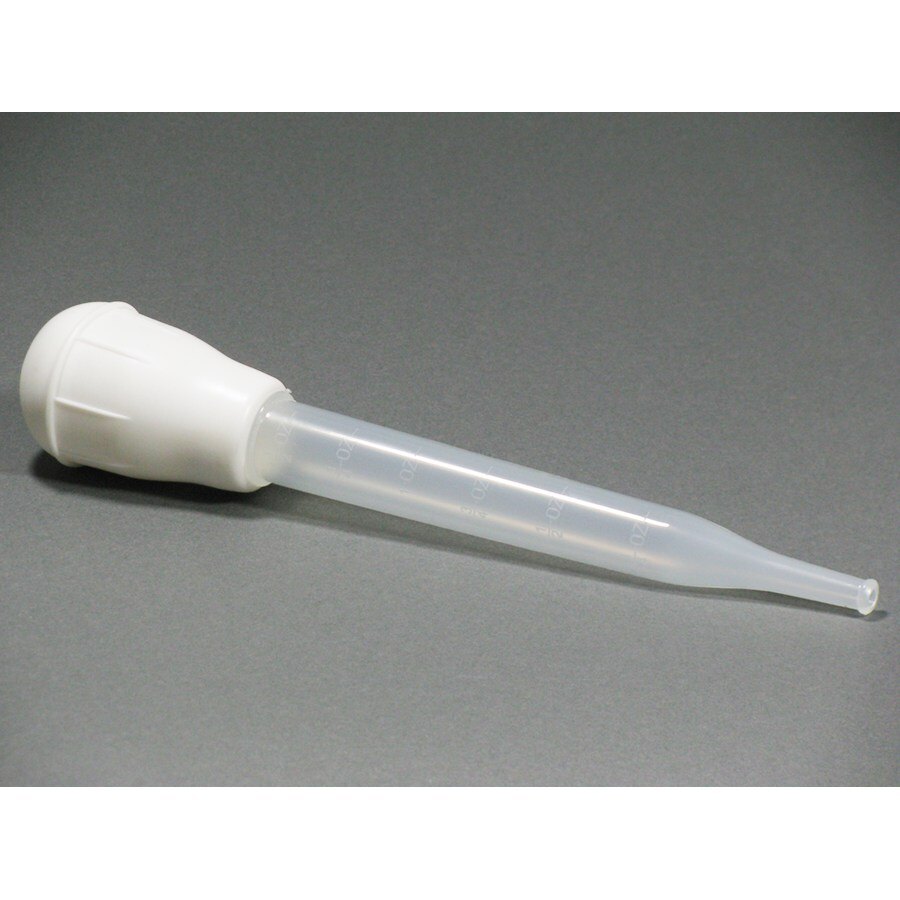
Behind this issue are claims made with some fervor by some that there are "unhealthy" microbiomes, which, it is reasoned, need to be replaced by healthy ones to protect us from harm. Some folks have taken matters to the extreme and have come up with interesting ways to replace their natural microbiome with what they perceived to be a "healthier" combo of intestinal microbes. Yong describes the pungent tale of an archaeology writer who inoculated his intestines with the feces of a member of the Tanzanian Hadza tribe, whose ancestral lifestyles and dietary habits (they are hunter-gatherers) were perceived to support a more pristine and "healthier" microbiome. Let us pause here to get a visual: a turkey baster was used to deliver the tribal feces a posteriori (as it were). Such procedure goes well beyond the reasonably justified fecal transplants that have been successfully used to treat highly recalcitrant Clostridium difficile infections. The recipient of the tribal fecal transplant did not have C. difficile — he was just trying to redress a cultural wrong imposed, he thinks, by his Western lifestyle and justified by the notable differences observed in the composition of Western and Hadza's microbiomes. Trouble is, the analysis of the Hadza's microbiome merely suggests that it may be better adapted to a foraging lifestyle, possibly facilitating the digestion of fibrous vegetable foods. Who is to say that this microbiome is "healthier" than that of other Africans and the Italians to which it was compared to?

Figure 2. A microbiological delivery device. Source
We are, by no means, underscoring the importance of comparative microbiomology. On the contrary, it is through such studies that we may end up understanding correlative patterns between the microbial composition and physiological differences in health and disease. From this point of view, the Hadzas are a particularly interesting reference group. They live in small isolated groups that practice no agriculture but subsist entirely on hunting and foraging. Such lifestyle is believed to most closely resemble that of Paleolithic humans. But are we to assume that their more pristine lifestyle makes their microbiome "healthier"? Quoting Yong, "this reasoning is faulty". In his article, we are further reminded of the numerous studies showing how the supposedly "healthy" members of a microbiome can turn against their host and do harm. And, conversely, those with a bad reputation can be integral members of a microbial community that causes no harm to its host.
In the end, all we know is that the human microbiome is complex and dynamic, just like the microbial communities that inhabit any other ecosystem. Furthermore, its members are as unique to us as our own genetic make-up and life experiences. Your microbiome is you and the choices you have made in your life. So leave your kitchen implements in the drawer and enjoy the read!
Reference
Schnorr SL, Candela M, Rampelli S, Centanni M, Consolandi C, Basaglia G, Turroni S, Biagi E, Peano C, Severgnini M, Fiori J, Gotti R, De Bellis G, Luiselli D, Brigidi P, Mabulla A, Marlowe F, Henry AG, & Crittenden AN (2014). Gut microbiome of the Hadza hunter-gatherers. Nature Communications, 5 PMID: 24736369