
Talmudic Question #61

Endocytosis is said to be an exclusively eukaryotic property. Why did prokaryotes not develop this ability?
Endocytosis is said to be an exclusively eukaryotic property. Why did prokaryotes not develop this ability?

by Mark Lyte — The emergence of the field of microbial endocrinology did not follow a straight course, nor was the destination intuitively obvious at the start. Like many research paths before it, the theoretical underpinnings of the field only emerged when it became obvious that the only explanation for the facts was a…

Pictures Considered #53 by Christoph — ...for the most part. And it's vastly deeper than the diagram Roberto showed in his recent post "The Biological Pump." The euphotic and mesopelagic zone sizes are correct, but do not even approximately corelate with their vertical representation in the diagram. Why is this a point...
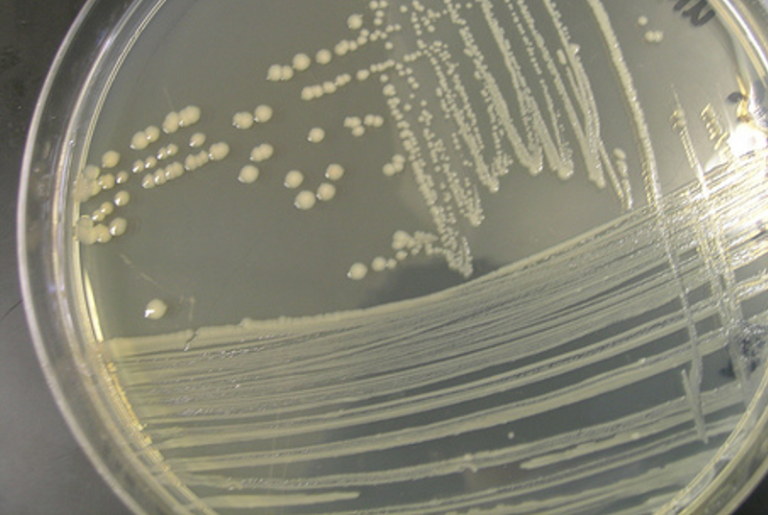
by Christoph — Say, you are a student in a molecular genetics lab course or a more advanced cloning expert, you will inevitably have to deal with E. coli. And to make E. coli bacteria grow quickly, standard protocols almost always suggest using LB medium as a "rich medium". You follow the protocol...

by Elio — E. coli may eventually get dethroned from its lofty position as the best studied, best known, and perhaps best exploited organism on this planet. The upstart is Vibrio natriegens, a marsh-dwelling gram-negative bacterium that grows 1.4 to 3.9 times faster than E. coli in the laboratory, depending on the medium (it also depends on which strain of the latter you're talking about).
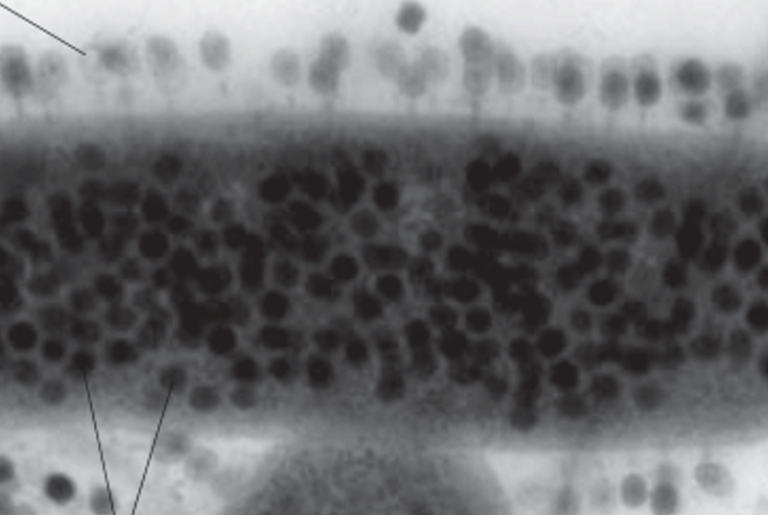
by Rob Phillips and Ron Milo — Viruses proliferate by infecting cells and hijacking their replication and protein synthesis machinery. After new viral proteins are synthesized and assembled, bursts of viruses are released from the infected (and usually soon to be dead) cells, starting the process all over again...

by Elio — Ah, truffles! They are the gourmet's celebration, the cook's inspiration, the common man's anticipation. And they demand quite a price, which at last count hovered around $2000 a pound for Italian white truffles, the French black truffles being cheaper, but still not within the reach of most people. And their production…
I have always loved this question, Elio. Several things occur to me as I write a final exam:
(1) There is something a little bit like it among some pseudomonads: "The Bacterial Mouth" article here at STC describes it. In fact, it seems like receptor mediated endocytosis to me...without the genuine endocytosis. Like a "coated pit"?
(2) This report suggests that something like endocytosis must have occurred at some point:
von Dohlen, C. D., S. Kohler, S. T. Alsop, and W. R. McManus. 2001. Mealybug β‑proteobacterial endosymbionts contain ‑proteobacterial symbionts. Nature 412:433–436.
(3) I would look for this property among the cell wall-less bacteria and archaea.
The "Small Masters" are clever and subtle, to misquote Einstein. Lovely Talmudic question!
Those early prokaryotes that developed endocytosis are called eukaryotes, right? Maybe the question is really why it hasn't happened over and over again?
I have seen an assertion that the only possible answer to why an adaptation didn't occur (e.g. external pinnae outside mammalia) is "because it didn't".
Cool question — similar to Talmudic Question #48.
What would you do with the vacoule once you swallowed it? Would the cell need a way to transport it internally? Perhaps to fuse it with another vessicle? Either way the cell would need to 'secrete' X‑ases into this vacoule and perhaps lower its pH to break down the engulfed components. The cell would then need a system to target transporters to this vacuole to pump nutrients back into the cytoplasm. Much of this could just as easily be done by secreting exoenzymes coupled with high efficiency transporters to import the resulting metabolites. Many exoenzymes are attached/associated with the cell wall/OM perhaps to keep from losing them to diffusion. This system of secreting digestive enzymes and transporting in the resulting pieces seems ubiqutious in bacteria. Maybe it is more likely to evolve because it is cheaper and less complex than endocytosis.
Bacteria do exocytosize in a sense. OM blebbing is useful for toxin delivery, signaling, and perhaps getting rid of periplasmic aggregates.
Do periplasmic chaperones have lower activity due to lack of ATP? Are all periplasmic chaperones holdases?
Makes me wonder whats the need for taking a bite out of your environment in the first place.
Why do eukaryotes need endocytosis?
1. Cell signaling
2. Phagocytosis of microbes
3. Nutrition (pinocytosis would be the only thing comparably useful to a free living bacteria as it's not specific)
4. Recycling Receptors
5. ?
Where would this be likely to be observed?
As Mark suggested we should look in bacteria lacking a cell wall. Otherwise endocytosis would result in an internal mini 'cell' complete with a murein layer. Endocytosis is in many cases receptor mediated. Should we therefore expect bacterial endocytosis to be found in symbionts or pathogens?
This year a cool paper appeared in PLoS biology about the evolution of membrane coat proteins. It turns out that there are bacteria out there that have internal vesicles, and have structural proteins much like ours to form them. All prokaryotes with such membranes are members of the superphylum of Planctomycetes, Verrucomicrobia and Chlamydiae (PVC). Maybe the PVC's are our closest prokaryote nephews...
I wrote a blog post on this subject on Lab Rat's blog: http://madlabrat.blogspot.com/2010/01/guest-post-dont-judge-cell-by-its-coat.html
Lucas' point is well taken, especially with the wiley Planctomycetes. If they have internal vesicles (and many prokaryotes do indeed have membrane bounded compartments), and proteins associated with their transit, it is a small leap indeed to endocytosis. My guess is that we will find exocytosis (large scale "blebbing" as the late Terry Beveridge and others found in pseudomonads) first.
We must resist colicentricity! But then, coliforms have enterosomes, come to think of it. Compartments everywhere—with or without membranes...
Simplistic response to talmudic question #61. Rigid cell wall of prokaryotes required for sustained viability precludes the manifold membrane activities (clathrin coated pits, invagination and sequestration of extracellular materials, delivery to intracellular compartments etc. A journyman's guess I know but there are no real answers to talmudic quesions are there?
Regards, Peter Bonventre
Elio's response:
I'll try my hand at responding to all these comments.
Mark once again displays his erudition. He points to a possible pre-endocytic mechanism, and to a case for prokaryotic endocytosis.
Nathan reminds us that prokaryotic endocytosis must have taken place in eukaryogenesis.
Daniel calls out attention that for endocytosis to be successful, the vacuoles formed must "survive." And he reminds us "blebbing" of the outer membrane is a kind of "exocytosis."
Lucas points to a paper maintaining that bacteria have internal membranes containing structural proteins analogous to ours. Mark says this is "a small leap" to endocytosis. Is it?
Peter call attention to the barrier to endocytosis presented by the prokaryotic rigid cell walls.
Anonymous (not posted) asks: "Might L‑forms do it?"
Do you agree with me that these are challenging thoughts?