
Of Terms in Biology: Planktonic
by Elio
The word planktonic is widely used in microbiology for organisms that are floating in bodies of water. It may be worthwhile to ponder its meaning. According to Wikipedia:"plankton consist of any drifting organisms (animals, plants, archaea, or bacteria) that inhabit the pelagic zone of oceans, seas, or bodies of fresh water." So, what does pelagic mean? Wiktionary says:"Living in the open sea rather than in coastal or inland waters." Clearly, microbiologists use the term planktonic without the "pelagic" restriction, and include any body of water, even that in a test tube. The word plankton is derived from the Greek word πλαγκτος ("planktos"), meaning wanderer or drifter (thus also related to planet).

Phase contrast image of diatoms. Source
What is the antonym of planktonic? Sessile comes to mind (i.e., permanently attached or established, not free to move about). Its etymology? From the Latin sessilis, from sessus, past participle of sedēre, to sit. But attached or clinging would do as well. Not relevant here but of linguistic interest, the antonym of sessile is vagile, having freedom to move about. I had never heard of it. I stopped being vagile years ago.
If sessile does not appeal to you, perhaps adhering would do. Or maybe we should invent a new term. How about biofilmic or biofilmatic? Want to vote it in or out? Let us know.
Editor's note: The image of a diatom chain previously displayed here was used without permission of the photographer and has been removed. If any blog visitors have downloaded that image, they should be aware that it is under copyright and that permission and payment of a fee is required for its use. Our apologies to the photographer.

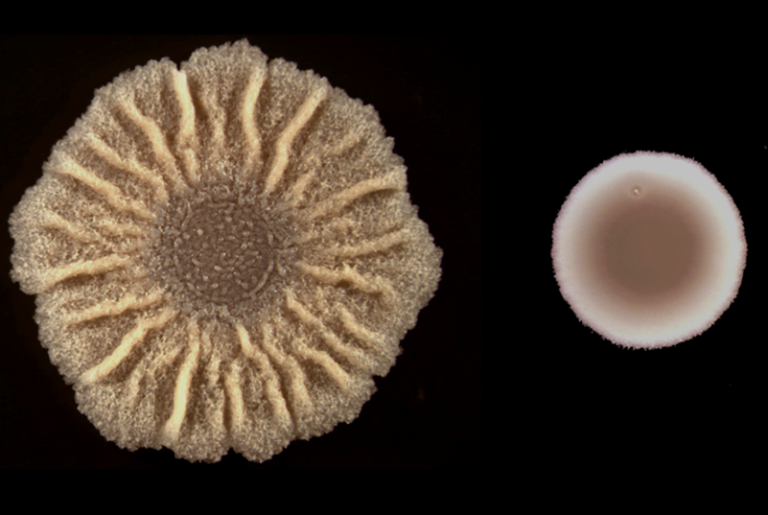




How about nekton, the term for those organisms that can actively swim in the pelagic zone. (There is also neuston — organisms restricted to the surface film.)
Elio repleis:
Hold on. We're going to post something about "nueston "next.
The real question, Elio, is what is the nature of the "biofilmome" involved.
I apologize in advance for the scorn that will be heaped upon that comment!
Elio replies:
Hold on. There's more coming (when it comes to marine microbial terms).
Let me propose "potatonic", as a synonym for sessile, but implying that the stationary position results from not making the effort to move, rather than from actual adhesion.
Does 'benthic' work?
Elio replies:
Benthic refers to the bottom surface of the oceans, not to the water column.
On the matter of 'biofilmic' or 'biofilmatic', I would have to disagree to their usage as an all-encompassing antonym to 'planktonic', given that surface-attached cells might not necessarily form biofilms (although they certainly have the potential to form as such). Also, 'planktonic' seems to refer to the individual cell and its behaviors, while 'biofilmic', etc. more implies a consortium of organisms — thus weakening the antonymic relationship between 'planktonic' and the proposed terms.
Dear Elio, Merry and all readers,
I appreciate that you are enjoying my image of an Antarctic diatom chain but like all my images (and most other texts and photos found on the web unless they are specifically noted as being in the public domain), my image is protected by copyright and this use can be considered copyright infringement because it was used without my knowledge or permission, and no license fee was paid for its use. Like other artists and photographers, licensing and selling my images is my income. Please either delete this image from your site and alert readers not to use it if they lifted it before removal, or contact me to arrange a fee.
Thanks,
Dee
I tried to leave a note here to ask if we should start the field of "biofilmomics," but it didn't seem to take. Unless the Microbial Good Taste Police deleted it! Too many "omics" spoils the field, perhaps?
Hi,
I would say that the antonym of plankton refers to organisms that do not drift in the current, thus swimming organisms, and the correct word for that would be NEKTON: (wikipedia) Nekton refers to the aggregate of actively swimming aquatic organisms in a body of water (usually oceans or lakes) able to move independently of water currents.
Concerning the 'attached' microbiota, it depends on which organisms and on what these organisms are attached; few examples: phytobenthos, epizoic, ...
Marine calcifying organisms include strictly planktonic as well as meroplanktonic organisms. Meroplankton spend only part of their life in a planktonic stage and include benthic larvae.
Great! Thanks for the great informative post and your effort.
I think the above article is valuable for all concerned people. For me the Informations are really really useful. I've Bookmarked this page for future reference.
Thank you
Robin Jokes
Wonderful! I really did not think about this topic before from your point of view. But now I am thinking about your idea. I've also discussed with my friends about your post.
Thank you Elio. I've bookmarked this page for my reference.
Mandy Green Tea
This is my first time i visit here. I found so many interesting stuff in your blog, especially its discussion. From the tons of comments on your articles, I guess I am not the only one having all the leisure here! Keep up the excellent work.
Thank You
Kukrimart