
Talmudic Question #50

What do you think are the most interesting questions in present day microbiology?
What do you think are the most interesting questions in present day microbiology?
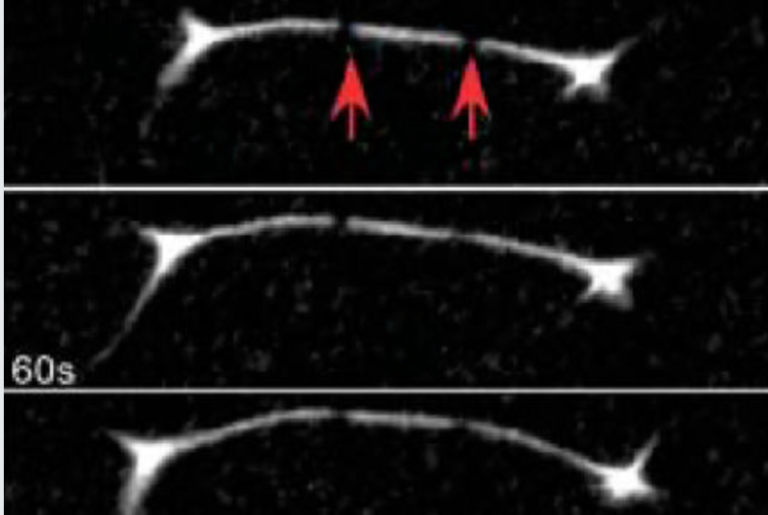
by Merry and Elio — More often than not, basic cellular phenomena have been deciphered first in bacteria, and then later elucidated in eukaryotic cells. A glaring exception is mitosis which was first described for eukaryotic cells in the 1880's. The corresponding story for bacterial chromosomes has remained uncharacteristically elusive. Truth...

by Welkin Johnson — Do the seven strategies in the Baltimore scheme of viral replication represent all possible ways of being a virus? Have other strategies fallen by the evolutionary wayside?

by Welkin Johnson — One hundred years ago this month, Peyton Rous published the first in a series of papers describing experiments that began with work on a sarcoma from a single Plymouth Rock hen. In that initial paper, Rous showed that bits of the tumor could establish new tumors when...
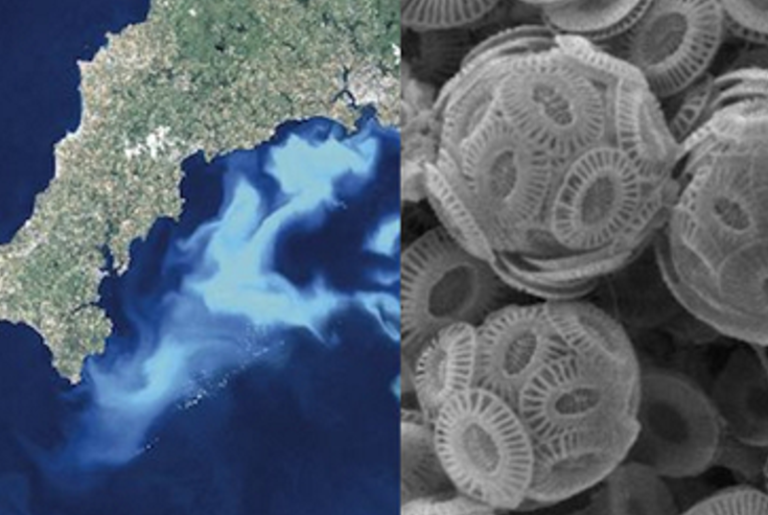
by Elio — In the ocean, bacteria and eukaryotic microbes (mainly the phytoplankton) interact in various ways, some mutually beneficial, others detrimental. Many, perhaps most of these interactions, take place via chemical communications. If you had a hydro phone-like gadget that could detect chemicals instead of sound, the racket would be deafening. Yet, we know little about these goings-on.

by Joe Mahaffy — Mathematics and Biology have a long history together. It goes back to early studies on epidemiology (such as John Snow's on cholera and the Broad Street pump), and includes Ross's quantitative studies that show how malaria can be controlled by careful analysis of data. And, of course, there are many…

by Roberto — Our knowledge of the structure of microbial cells just keeps getting better as the resolution of imaging techniques continues to increase. A key player in this rapidly evolving technological field is cryo-electron tomography (cryoET) which, aided by powerful computational tools, allows for the generation of three-dimensional images of whole microbial cells...
How do glycopeptidases such as Rpf from Micrococcus luteus signal bacteria to get out of a "viable but not culturable" state?
How many organisms out there are truly "unculturable"? Or perhaps, are there any microorganisms that are truly "unculturable", not counting obligate parasites (if they truly exist:))?
The whole concept of "sociomicrobiology" is one that fascinates me endlessly....
Also, I would love to see a post by an expert on this entire "viable but not culturable" state. Hmmmmm....
1. How does a bacterial cell, upon approaching a prokaryotic cell, distinguish between friend or foe?
2. How does a bacterial cell, upon approaching a eukaryotic cell, distinguish between friend or foe?
3. Are the same mechanisms involved?
Sorry if this is rather unpleasant and it has more to do with the human immune system, probably, than microbiology, but why don't people with bleeding hemorrhoids get terrible blood infections?
Seems like they'd go septic in no time.
,, So, naturalists observe, a flea Has smaller fleas that on him prey; And these have smaller still to bite 'em; And so proceed ad infinitum." (Jonathan Swift)
— What are the entities which may contribute to the governing of the surroundings such as viruses, virions, and/or prions. What is their mode of action?