
From Free-Living Bacterium to Cellular Citizen
by Elio
But in the end I hope you only turn out better than me
I hope you know I love you young'n, like Father, like Son
"Like Father, Like Son" Birdman and Little Wayne
Given the heritage of cell organelles, microbiologists may well be entitled to a familial concern for how their "bacteria" are faring now. Witness a lapel button we saw at an ASM meeting that said "Free the Organelles." (Click here for how to get one.) Mitochondria, chloroplasts, and others have drifted considerably away from their ancestors, and therein lie some great tales.
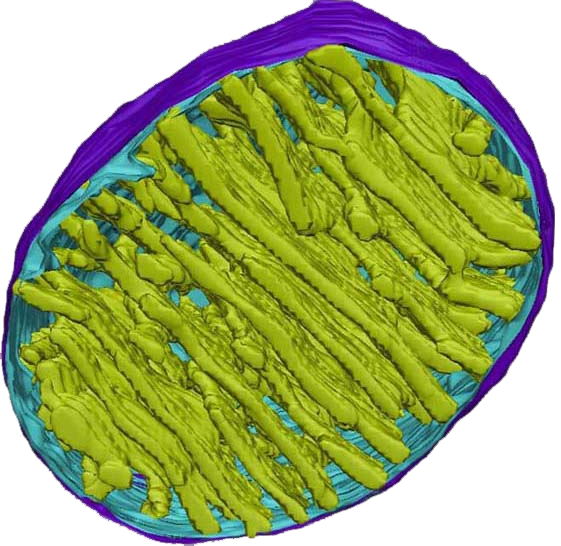
Figure 1. A nice mitochondrion. Credit: Terry Frey, San Diego State University.
Read, if you need convincing, a joyously celebratory review of reviews by Gottfried Schatz that highlights the essence of mitochondricity. Forgive us, but this leads us to a couple of digressions. Schatz says that "....on a weight basis (a mitochondrion), converts between 10,000 and 50,000 times more energy per second than the sun." Our second digression is pure chauvinism. Schatz tells us that it was a microbiologist, Richard Altman, who in 1890 coined the name "mitochondria" and that it took another microbiologist, Peter Mitchell, to figure out how the energy of respiration is coupled to ATP synthesis.
Going back to the theme, organelles differ from their bacterial forerunners in many intriguing ways. For one, it turns out that the mitochondria of "higher" eukaryotes (and some "lower" eukaryotes such as yeast) are unruly entities that lack a discrete corporeal identity – the sine qua non of bacteria and all other cells. It has been known for some time that mitochondria fuse with their neighbors and later divide and wander all over the cell. Think of them as making up a dynamic network, a relaxed kind of structural arrangement that requires some adjustment of the microbiological mindset.
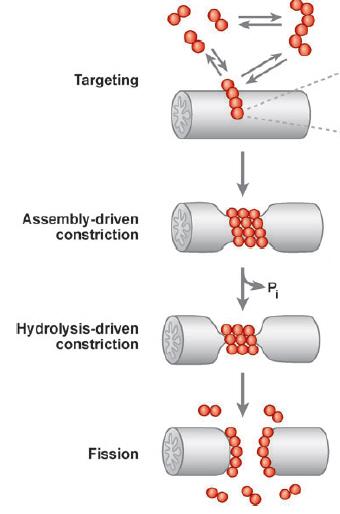
Figure 2. A model of the mechanism of mitochondrial division. Source
We might expect, then, the process of division to differ between organelles and bacteria, although neither use a "conventional" mitotic apparatus (a topic discussed previously in this blog.) When organelles divide, do they use the same proteins that participate in bacterial cell division? Yes and no. Both mitochondrial and chloroplast division involve dynamins, a family of quite exciting proteins. Dynamins are mechanochemical GTPases that participate in endocytosis and other forms of vesicle trafficking. In brief, once modified by GTP, dynamins make long spirals that tighten around the site of division until the organelle is cut in half or, if this were a vesicle, it is excised. (If this sounds like a snake constricting its prey, forget it. You know that snakes squeeze only to prevent their victim from inhaling.) Dynamins are targeted to their site of action by other proteins (See this review for more details.), in much the same way as for FtsZ, the tubulin protein required for cell division in all but a few bacteria.
Have dynamins replaced FtsZ in the organelles? Again the answer is both yes and no. The mitochondria of "higher" cells appear not to have FtsZ. However, FtsZ has been found in the mitochondria of quite a few protists. FtsZ is widely found in chloroplasts and in some cases has been shown to be essential for their division. Some chloroplasts even retain other cyanobacterial division genes such as the MinD and MinE proteins dear to the hearts of students of bacterial cell division. Here's another twist. Arabidopsis chloroplasts have two FtsZ proteins, one of which appears to act on the inner membrane, pulling it inward as does FtsZ in bacterial division. The other one acts on the outer membrane, squeezing from the outside, as does dynamin in mitochondria. In some instances, FtsZ is known to be encoded by the nucleus – a nice example of lateral gene transfer from the ancient endosymbiont to the nucleus.
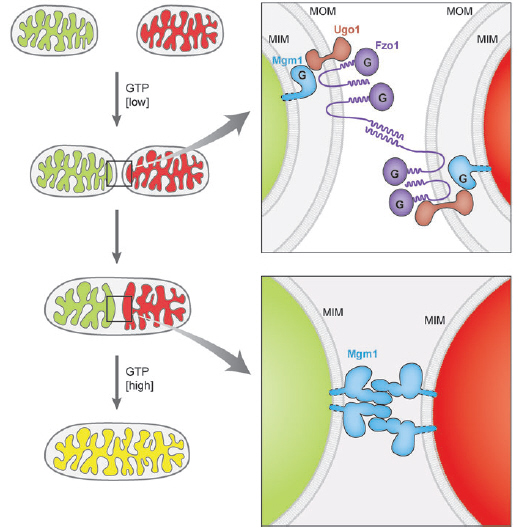
Figure 3. A model of the mechanism of mitochondrial fusion. Source
Mitochondrial fusion is another matter, a skill acquired independent of bacterial ancestry. There are few examples of bacteria fusing, except through laboratory manipulations. Dynamins are involved in fusion, too – different kinds than the ones that participate in division. The process of fusion is doubly intricate because the outer and inner mitochondrial membranes fuse separately, using different proteins. One protein in the outer membrane, called Fzo1 in yeast, tethers to its opposite number on the other mitochondrion via their helical regions. (See this review.) After the outer membranes join, the inner membranes carry out a separate fusion process, this time via tethering by Mgm1 proteins.
Why do mitochondria both fuse and divide? To quote from a review paper: "Mitochondrial fusion is required to distribute mtDNA to the mitochondrial population and maintain respiratory competent and energized organelles. Mitochondrial division is required to efficiently distribute organelles to distal parts of cells." Frankly, this begs more questions, for example, why haven't mitochondria retained the bacterial mechanism that ensures genome segregation? That is, why doesn't each mitochondrion just hold on firmly to its own DNA?
Yet another question suggests itself. Some unicellular organisms have a single mitochondrion or chloroplast. Doesn't this simple fact imply some degree of stringency in organelle division in those organisms? We will discuss this in another posting in the near future.
This balance between fusion and fission is a matter of great importance to the host cells. Mutations in fusion proteins affect apoptosis and, in humans, cause neurodegenerative diseases. But it's even bigger than that. To quote from Schatz's review: "Today almost every disease seems to have some mitochondrial angle, be it diabetes, deafness, blindness, muscular dystrophy, cancer, premature aging, dementia, male infertility, or even some bacterial infections."
Free the organelles? Sorry. It's too late.
Source of Figures: Hoppins S, Lackner L, and Nunnari J. (2007). The machines that divide and fuse mitochondria. Annu. Rev. Biochem. 76, 751–80 PMID 17362197


Excellent post. I've put in a good word for it on my page.
Christopher Taylor wrote a very nice post on his blog, and below it, his confirmation (while discussing the corynebacteria) of what we all already know: it is *always* the Age of the Prokaryote.
With all due respect to Frank Sinatra, it is a microbial world—we just live in it.
Many thanks to Elio for mentioning my "prokaryotic pride" buttons. They are meant to be silly, but to remind us of the primacy of microbial life (a colleague where I used to teach once objected to listing microbiology as an "organismal biology" course). Both "prokaryotic pride" and "Free the organelles!" were mottos that I came up with in conversation with Abigail Salyers while I took the Microbial Diversity course at Woods Hole too many years ago. I'm sure that many other people have great ideas for mottos, and I look forward seeing them in the future!
Just thinking, Elio and Merry. I yield to no one in my belief in Prokaryotic Primacy, as you know. But many of the mitochondria-involved genes have been integrated into that nasty old eukaryotic genome. Thus, the mitchondria cannot live on their own. Slavery?
I grant that eukaryotic cells of our kind cannot survive without prokaryotic-derived mitochondria. Those organelles are thus vital, key...but are they free?
I believe that there is an amoeba that lives anaerobically, but can "take on" bacteria to fulfull a mitochondrial-like function.
HORN M, WAGNER M (2004) Bacterial Endosymbionts of Free-living Amoebae. The Journal of Eukaryotic Microbiology: Vol. 51, No. 5 pp. 509–514.
But let's not forget the sea slug Elysia chlorotica. It "harvests" chloroplasts from the algae it consumes...and the chloroplasts function within the salivary glands of the sea slug.
http://www.seaslugforum.net/factsheet.cfm?base=elyschlo
http://www.seaslugforum.net/factsheet.cfm?base=solarpow
What do you call that process? Kleptoplasty?
This is a great topic—the cytoplasm of a eukaryotic cell as an ecosystem full of niches!
Elio replies: You are right, the subjects of organellogenesis and endosymbiosis are endlessly fascinating. The number of combinations is greater than what out imagination allows! In this blog, we try to bring up cogent examples. Yours are particularly vivid. Think of writing them up!
This stuff is fascinating. All I can remember is the humble Spyrogyra from school biology. However, I've been intrigued by a case I've been working with lately (as a temp student adviser for a student with special requirements) and it involves Charcot–Marie–Tooth disease. Any pointers or latest research, or just your own thoughts on this one would be appreciated, because, although you may not know it yet, you guys appear to be amongst the most qualified specialists. All I can find is Wikipedia and a total lack of other inspiration.
I'm a scientist of inorganic smart materials:- magnetorheological fluids and nitinol, all that kind of good stuff I can't get a job in and your field would take me a large number of years, at least, to catch up on. Any insights on the latest thinking in mytochondrial myopathy would be most appreciated. I don't think we're too far away from our borders crossing, and without sounding like Borg — I'm looking forward to the day. We will be assimilated!
Justin
repossessed cars
Hello, my name is Katya Carcaño, I am a Morphology student from México. This blog was a nice surprise, I was doing some reaserch about mithocondria fusion and I steped into this amazing blog.
Many thanks!! I hope I can learn more about this miniature wonderful world!
Katya.