Mining the Proteome
by Merry Youle
If you had oodles of proteomes at your disposal, what sorts of questions might you ask? A group of Polish investigators classified the proteins in 1784 (!) proteomes based on their isoelectric point and found some interesting correlations between the isoelectric point (pI) of the individual proteins and their length.
Acidic proteins tend to be longer than basic ones, and not just by an amino acid or two. They average 73 amino acids longer in Bacteria and Archaea, 103 amino acids longer in Eukaryotes. The smallest proteins are the most basic – not surprising since the very basic proteins interacting with nucleic acids (for example, histones, ribosomal proteins) are short.
Their analysis divides the proteomes into two major groups: plastids, viruses and plasmids with more basic proteomes, and Archaea, Bacteria, Eukaryota, mitochondria, and phages with more acidic ones. They point out that plastids have a high proportion of basic ribosomal proteins and viruses a lot of basic nucleic-acid binding proteins.

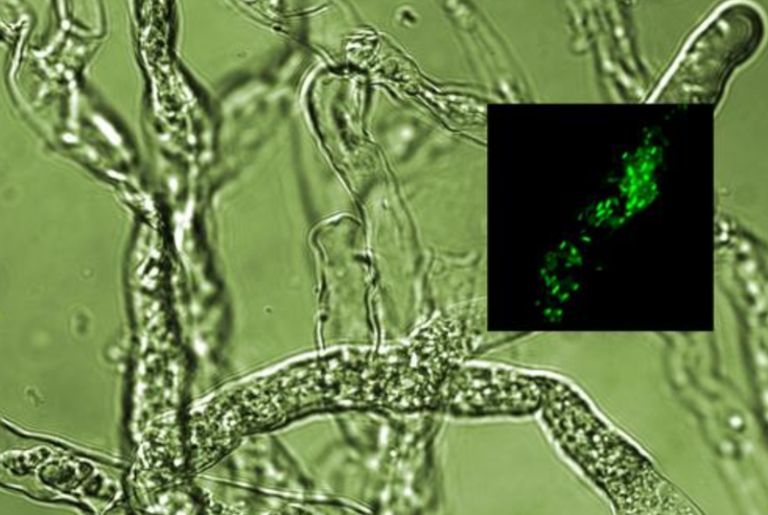
The halophilic cyanobacterium Halospirulina at a salt concentration of about 100 g per liter. Source
They confirmed earlier observations that, in closely related organisms, the size of orthologous proteins is more conserved than their pI. Does the greater divergence in the basic or acidic nature of the proteins reflect adaptative changes? The authors found that in prokaryotes the pI of the proteome correlates with some environmental factors, such as salinity – the more halophilic the organism, the more acidic the proteome – but not with temperature or oxygen.
A most suggestive story: they found that the pI of proteomes of free living and extracellular prokaryotes are typically acidic, whereas those of intracellular organisms are almost all basic. Since the shift to an intracellular existence typically involves genome reduction, they considered the possibility that acidic proteins are selectively lost in the process. Based on the comparison of eight pairs of closely-related free-living and intracellular organisms, the pI of over half of the proteins retained by the intracellular forms had shifted from acidic to basic. Particularly pleasing, they noted that the few intracellular organisms found to have slightly acidic proteomes all reside in vacuoles. This suggests the possibility that selective pressure acts not only to retain protein function but also to favor amino acid substitutions that alter the pI of the protein to suit the new environment.
Nice correlations.