Speak or Swim – But Not Both

by Elio

Many path­o­genic bac­te­ria "speak" a chem­i­cal lan­guage by in­sert­ing pro­teins into host cells that af­fect the mi­crobe's abil­ity to in­vade or dam­age the host.  For the in­ser­tion, they use a com­plex nee­dle made up of a num­ber of pro­teins (called a Type III se­cre­tion sys­tem). Sim­i­lar pro­teins in sim­i­lar struc­tural arrange­ments are also in­volved in mak­ing the basal body of the fla­gella used for swim­ming. The two pieces of ma­chin­ery, though dif­fer­ing in func­tion, are evo­lu­tion­ar­ily re­lated. Not only that, they in­ter­act with one an­other.

The Elec­tron mi­cro­graph (here) and the diag­ram (be­low)  are cour­tesy of Noreen Fran­cis, Den­nis Thomas and David DeRo­sier.

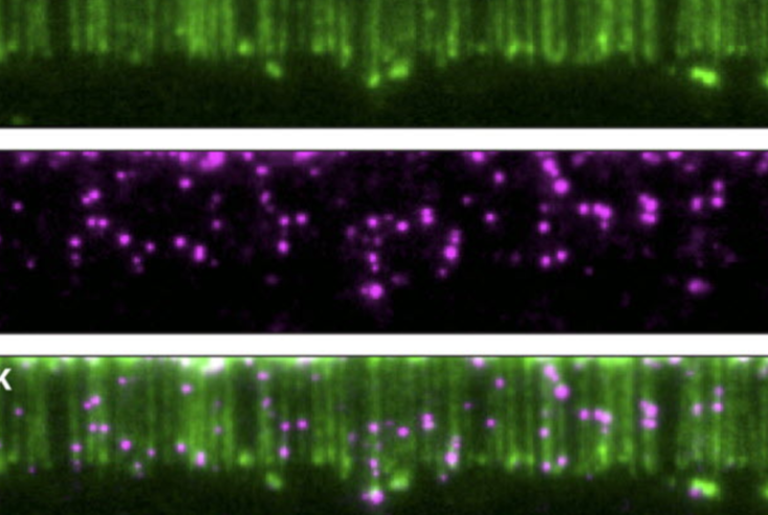
A re­cent study by a lab in Mar­seilles  re­veals that Pseudo­monas aerug­i­nosa can make only one of these pieces of ma­chin­ery at a time, not both. No fla­gella, more Type III ma­chin­ery, and con­versely more Type III ma­chin­ery, fewer fla­gella.  The au­thors sagely pro­pose that some vir­u­lence fac­tors are co­or­di­nated but in­versely reg­u­lated.  Which are turned on and which are turned off likely de­pends on the dif­fer­ing de­mands of dif­fer­ent stages and types of in­fec­tion.

The struc­ture of the bac­te­r­ial basal  body of fla­gella has been re­cently re­ported in its full splen­dor from David DeRosier's lab.


Other Posts

  • Ad­her­ing To The 'Repli­con Model' The Sloppy Way

    by Christoph — Sixty years ago Ja­cob, Bren­ner and Cuzin de­vised their 'Repli­con Model', in­spir­ing and use­ful guide­line for repli­ca­tion re­search ever since. Ac­cord­ing to the model, a 'Repli­con' is a ge­netic el­e­ment repli­cated from a sin­gle 'Repli­ca­tor' – repli­ca­tion ori­gin, in mod­ern terms – and repli­ca­tion is trig­gered by a pos­i­tive trans-act­ing fac­tor, the 'Ini­tia­tor'…

  • Bdellovibrio's Ap­petite for Metabo­lites

    by Henry N. Williams — Not long ago, Elio said in this blog that pre­da­tion, a ma­jor force in evo­lu­tion, is some­what ne­glected in mi­cro­bi­o­log­i­cal cir­cles. The full im­pli­ca­tions of pre­da­tion are just be­gin­ning to be un­cov­ered as more be­comes known about the ecol­ogy, phys­i­ol­ogy, and ge­nomics of preda­tors against mi­crobes and their in­ter­ac­tions…

  • Cell Di­vi­sion Through DNA Cur­tains

    by Gemma Reguera — De­spite the ap­par­ent sim­plic­ity of bac­te­r­ial cells, their cell di­vi­sion cy­cle is a com­plex de­vel­op­men­tal pro­gram that cou­ples cel­lu­lar growth to the repli­ca­tion and seg­re­ga­tion of chro­mo­somes and the di­vi­sion of the cell's cy­to­plasm (aka cy­toki­ne­sis) (Fig. 1). The bac­te­r­ial cell di­vi­sion cy­cle starts with the com­mit­ment of the cell…

  • The COVID-19 Virus by the Num­bers

    by Elio — The trio of Yi­non Bar-On, Rob Phillips, and Ron Milo, here aug­mented by Avi Flamholz, have done it again. In the past, they pre­sented us the as­tound­ing num­bers for the dis­tri­b­u­tion of bio­mass on this planet, no less. We high­lighted this sem­i­nal con­tri­bu­tion to our un­der­stand­ing of the liv­ing world...

  • It Takes Three to Tango

    by Merry Youle — Glassy-winged sharp­shoot­ers, long no­to­ri­ous in wine coun­try as an in­sect vec­tor for Pierce's dis­ease in grapes, have re­cently achieved no­tice for em­ploy­ing not one but two bac­te­r­ial en­dosym­bionts to pro­vide es­sen­tial nu­tri­ents. One...

  • On Bac­te­ria Get­ting Fat

    by Roberto — In bac­te­ria and ar­chaea, lipids seem to be found mainly in the cell mem­brane. Can you think of pos­si­ble func­tions for lipids else­where in bac­te­r­ial and/or ar­chaeal cells? On first in­spec­tion, these two open­ing sen­tences have the mak­ings of an STC Tal­mu­dic Ques­tion. Ex­cept for the fact that in­tra­cel­lu­lar fat ac­cu­mu­la­tion or, more pre­cisely, cy­to­plas­mic li­pidic in­clu­sions...

1 Comment
Oldest
Newest Most Voted
Robert Murray
19 years ago

This ob­ser­va­tion points out and re­in­forces a prin­ci­ple that cells do not get rid of a mech­a­nism (set of genes)when they are no longer re­quired but con­serves them for an­other pos­si­ble use or for mod­i­fi­ca­tion so that a new process or struc­ture can be uti­lized. The trans­port sys­tems' re­la­tion­ship to fla­gella mo­tors is a great ex­am­ple. There are prob­a­bly more vari­a­tions on the re­mark­able struc­ture of AT­Pase than we know now, and this is the more in­ter­est­ing be­cause like the step of mak­ing a fla­gella mo­tor there is a mov­ing el­e­ment in that com­plex of mol­e­cules. Pre­sum­ably there are many ex­am­ples and so there should be a sort of phy­logeny for the de­vel­op­ment oof func­tional com­po­nents. Maybbe this could be like the elab­o­ra­tion of su­per-anti­gens of Strep­to­cocci over the past fifty year. What will they be used for next? It re­sem­blles the gad­geteers box of col­lected scraps of "junk"that may be use­ful some­time.