
Talmudic Question #1

Where on Earth would one expect to find a single species of microbes (a pure culture) for sustained periods of time? Symbioses (mutualistic or parasitic) do not count, neither do Petri dishes.
Where on Earth would one expect to find a single species of microbes (a pure culture) for sustained periods of time? Symbioses (mutualistic or parasitic) do not count, neither do Petri dishes.

by Merry — Because it prefers to dine on some of our valued crop plants, the pea aphid (Acyrthosiphon pisum) is considered a major pest — thus a Bad Guy from our perspective. Pea aphids are not without their enemies. Enemy number one is a parasitoid wasp, Aphidius ervi. As parasitoid wasps are used to do, females provide for their offspring by...

by Vincent Racaniello — Are viruses living entities? I don't believe so, but it's an engaging question for debate. On a recent episode of 'This Week in Virology' we concluded that it's somewhat of a futile argument because everyone has their own view; perhaps our time is better spent studying viruses than...

by Elio — «Week of the Fungi» on STC is a sporadic undertaking. This occasional festival is our way to hail the fall mushroom collecting season in parts of the northern hemisphere. We are a bit late this year, but mushroom collecting is still possible in many parts.

To turn the tables, are there eukaryotic endosymbionts of prokaryotes? (Keep in mind that some bacteria are larger than the smallest eukaryotes.)

by Jenn Tsau and Suzy Szumowski — When cells divide, it's really important that they do so equitably so you don't end up with some having too much and some too little cell material; the results of either could be deleterious. Therefore, over the billennia that life has been around, mechanisms to carefully divvy up...
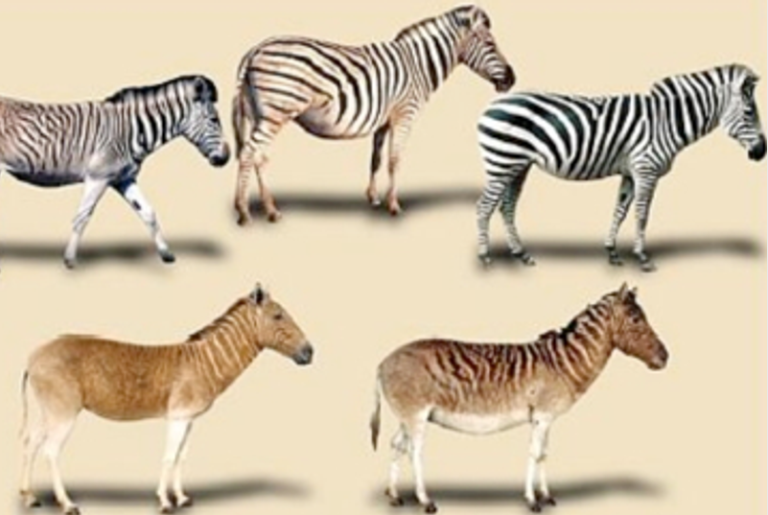
by Elio — These terms from biogeography are becoming relevant to us because of the present-day rise of microbiogeography. More and more, we hear about the "geographic" distributions of microbial species and strains.
Probably nowhere; although habitats possessing an intersection of
persistent and stable "extreme" physicochemical conditions (pH, temp,
water activity) and limited organic nutrients come closest. For
example, the hot, acidic, redox mineral-rich habitats studied by Jill
Banfield (UC-Berkeley), Anna-Louise Reysenbach (Portland State), and
others.
John Breznak
There are several documented cases of bacterial pure cultures. In fact this requirement was at the root of our Photorhabdus luminescens genome project (we wished to have a model enterobacterium that, in contrast to E. coli, would have a limited number of partners). This enterobacterium multiplies as a pure culture inside insect larvae cadavers it feeds on. Or, rather, this is not exactly a pure biological culture as another organism multiplies in parallel, the host Heterorhabditis bacteriophora (or several other Heterorhabditis species), with which P. luminescens makes a symbiotic association. The genome of P. luminescens provides some explanation about this observation: it is filled with toxin and antibiotic production genes, so that it is indeed unlikely that other bacteria or fungi could multiply in the media invaded by the bacteria. P. luminescens also colonizes the gut of the nematode, but it is not absolutely certain that it is the only bacterium living there. It is not established either whether it multiplies there (in contrast to the insects' larvae, where it multiplies fast and efficiently rapidly making them luminescent). One puzzling question remains: while P. luminescens is fairly frequent (in tropical sea shore regions in particular), it has never been found in the wild outside of a host, it is either in the gut of a nematode, or multiplying in an insect larva.
Bacillus subtilis, the hay bacterium (this is its name in Polish or in Japanese) could also be considered as making pure cultures in the wild. In fact, incubation of grasses in broth often yields pure B. subtilis cultures, suggesting that it can be a lone colonizer of the phylloplane. This has curiously been overlooked, because B. subtilis is usually presented as a soil bacterium, through automatic writing, without any verification. Of course leaves fall out on the ground, so that it is not unexpected to find B. subtilis in soil. However its genomic features suggests a strong association with leaves, and the fact that it makes polyketides and surfactin is in favour of it occupying the surface of leaves, probably often as a lone colonizer.
Something pretty close to a pure culture happens as a salt pond evaporates to saturation.
In an extreme environment. The lowest number of species we ever got down to (using DNA technologies, not culture-based methods) was about 10 (from an extremely alkaline Mongolian salt lake which froze in the winter and almost boiled in the summer.
What about biofilms of a single species?