Fine Read­ing: Two Fine Pro­tist Blogs

Note in 2023: best we know, both blogs men­tioned here have been in­ac­tive since 2015 and 2014, re­spec­tively.

by Elio

Merry and I would like you to know about two spe­cial­ized blogs that deal mainly with pro­tists, one called Skep­tic Won­der, the other The Ocel­loid. The first one is a spir­ited blog whose his­tory goes back to 2008, the sec­ond a re­cent ad­di­tion to the Sci­en­tific Amer­i­can Blog Net­work. Both are writ­ten by a friend and avid pro­tis­tol­o­gist who goes by the name of Psi Wave­func­tion, and we're glad to help pub­li­cize them.

We ap­plaud the blogger's ef­fort, in good part be­cause we be­lieve that pro­tists need good press. Every­one has heard of them, per­haps en­coun­ter­ing them as pond-scum para­me­cia in high school, when learn­ing about malaria, or more re­cently in the hoopla about us­ing mi­cro-al­gae to pro­duce fu­els. But they de­serve more at­ten­tion than that for their enor­mous va­ri­ety in shape, size, and ge­nomic com­plex­ity. They have a cen­tral role in this planet's me­tab­o­lism, be­ing re­spon­si­ble for a huge amount of car­bon cy­cling. In ad­di­tion, many, like the di­atoms, are a joy to the eye.

The first is­sue of The Ocel­loid is A Quick Dive into the Pro­tist World, and quite a trip it is. Here you'll en­counter or­gan­isms you may have heard about, or not—intricate ra­di­o­laria, filose amoe­bas that leave tracks on the sand, and gor­geous foraminifera. The name of this blog refers to an eye-like struc­tures of di­nofla­gel­lates, the ocel­loid. This is a true model bi­o­log­i­cal won­der, with a com­plex­ity that ap­proaches that of the ver­te­brate eye, all in one uni­cel­lu­lar or­gan­ism.

Many blogs de­serve your at­ten­tion, but these two stand out in our opin­ion.


Other Posts

  • Stops Mak­ing Sense

    by Christoph — One of the most con­vinc­ing ar­guments for a com­mon ori­gin of all known life forms on this pla­net is that they all use the same ge­net­ic code. In my un­der­stand­ing, the ar­gu­ment is strength­en­ed, per­haps some­what coun­ter‑­in­tuiti­ve­ly, by the nu­mer­ous find­ings that and how ma­ny life forms mo­di­fy the ca­no­ni­cal ge­net­ic code in ways that suit them...

  • A Whiff of Tax­on­omy – Lacry­maria olor

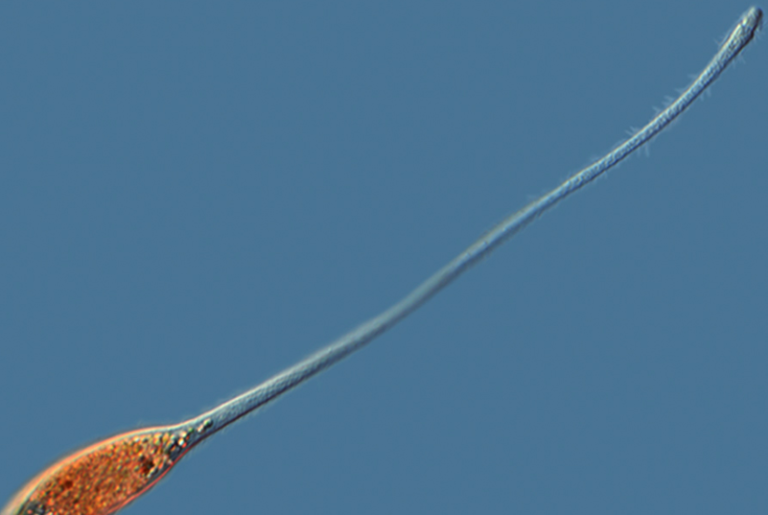
    by Roberto — I was re­cently made aware of one of Earth's "most in­ter­est­ing liv­ing be­ings ow­ing pri­mar­ily to its power of elon­ga­tion, its won­der­ful elas­tic­ity and its great free­dom of move­ment." Thus be­gins a cap­ti­vat­ing 1911 ar­ti­cle by S. O. Mast, de­scrib­ing the amaz­ing fea­tures of the cil­i­ate Lacry­maria olor.

  • See­ing How An­tibi­otics Work

    by Elio — One would as­sume off­hand that the path­ways for syn­the­sis and as­sem­bly of the ma­jor con­stituents of a bac­te­r­ial cell "talk to each other," i. e. they are tightly in­ter­wo­ven processes. Tam­per­ing with the biosyn­the­sis of one should af­fect all the oth­ers, right? Wouldn't you ex­pect, for in­stance, that if pro­tein…

  • Love At First Zap

    by Gemma Reguera — Al­though both co­op­er­a­tion and con­flict are de­ci­sive forces in evo­lu­tion, some of the most suc­cess­ful mi­cro­bial strate­gies for sur­vival have arisen from co­op­er­a­tion. At times, two or more mi­croor­gan­isms can even come to­gether to breathe as one. Breath­ing, or res­pi­ra­tion, ac­com­plishes a most chal­leng­ing fête: the dis­posal of elec­trons gen­er­ated in meta­bolic…

  • An Epis­tle From the Past

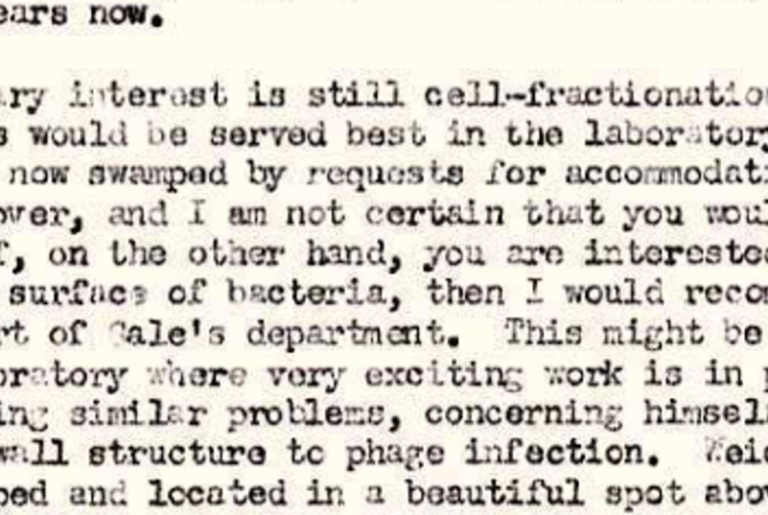
    by Elio — I re­cently found a let­ter I re­ceived in 1955, giv­ing me ad­vice about where to ap­ply for a post­doc in Eu­rope. In those days, do­ing a post­doc in Eu­rope was nearly de rigueur for young Amer­i­cans who wanted to fol­low an aca­d­e­mic ca­reer. I'm not en­tirely clear what the rea­son was, as there were plenty of front-line labs ac­tive in mol­e­c­u­lar bi­ol­ogy in the US. Surely the joy­ful prospect of a year or two abroad played a big role.